
3-in-1 Filling Machine Exporter Delivers Turnkey Liquid Packaging Solutions
2026-10-20
Every minute a liquid production line spends switching between separate washing, filling, and capping machines is a minute of lost throughput and rising labor costs. Wanying Machinery tackles this directly as a 3-in-1 filling machine exporter, supplying turnkey liquid packaging solutions that move bottles from rinse to sealed product without handoffs. Here’s what sets that integrated approach apart.
One Compact Line That Rinses Fills and Caps Nonstop
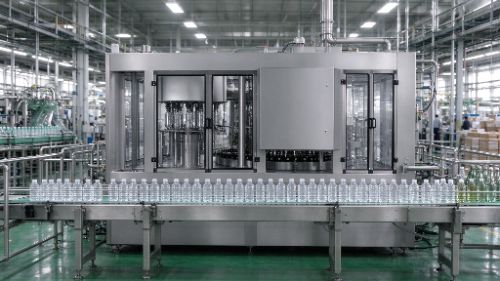
Most packaging lines need three separate machines and a fair amount of floor space just to handle rinsing, filling, and capping. This one compact unit rolls all three actions into a single frame, so bottles move from start to finish without being handed off between stations. The rinse nozzles, filling heads, and capping chucks sit close together, which saves room and cuts down on the usual clutter of conveyors and transfer points.
The nonstop cycle keeps things moving without pause. Bottles enter one end, get rinsed, filled, and capped in a steady rhythm, and exit ready for labeling or packing. There is no need to stop the line for changeovers between functions, and the machine holds its pace even on long runs. Operators can keep an eye on everything from one side, since the whole process happens within arm's reach.
For smaller plants or lines where space is tight, this all-in-one approach removes the need for extra buffers and intermediate tables. It also means fewer motors to maintain and fewer spots where a bottle can tip or jam. The result is a simpler layout that still delivers full rinsing, precise fill levels, and secure caps without breaking the flow.
Why Global Brands Choose This Exporter for Turnkey Liquid Lines
Most factories can assemble a tank and bolt on a pump. Few can step into a project where the brief is still fuzzy and hand back a line that runs on day one. That gap is exactly where this exporter operates. Global brands don't come here for a catalogue of parts; they come because the team asks the right questions before quoting a single valve. What's the actual viscosity drift at your plant's ambient temperature? Are your CIP cycles limited by floor drainage or steam availability? These aren't polite checkboxes. They're the difference between a line that works in a brochure and one that survives a night shift.
Another reason brands stay is the quiet removal of surprises. The exporter manages the mess that usually lands on the buyer's desk: late vessel deliveries, mismatched gasket standards, PLC programs written for a different voltage. Instead of shipping components, they ship a sequence—tested, documented, and handed over with the owner's team already trained on the same screens they'll use tomorrow. That predictability matters more than a low per-unit price when a stalled line costs thousands an hour.
And then there's the thing no spec sheet captures: the exporter remembers that a turnkey line is not a transaction. It's a relationship that starts with the first sketch and continues through expansion years later. When a brand needs to add a second pasteurizer or reroute a transfer loop, the same engineers who built the original line pick up the phone. That continuity is rare in this industry, and it's why global names stop shopping around after the first project.
Three-Stage Filling Made Simple Without Extra Conveyors
A compact filling line often assumes you need a conveyor between each dosing step, but that’s not the only way to build one. By mounting three filling heads around a single rotary indexing table, you can run a coarse fill, a fine top-up, and a final trim dose without ever moving the container to a separate station. The container stays in the same puck from start to finish, which also keeps neck alignment consistent.
The real trick is in the valve timing. Instead of sending the bottle down a long track to reach the next filler, the indexing motion brings the second and third nozzles to the bottle. Each head has its own short recipe, and the controller staggers the cutoffs so the previous dose has a moment to settle before the next one starts. That settling pause is built into the table dwell, not added as a separate buffering conveyor.
Cleaning and changeover get simpler, too. With no transfer conveyors between fill stages, there are fewer guide rails to adjust and no intermediate bottle jams to clear. Operators can access all three filling heads from one side of the machine, which shortens line clearance checks and makes it practical to run smaller batches without tearing down a long monoblock.
From Thin Juices to Thick Creams One Machine Adapts Fast
Switching from a watery green juice to a dense cashew cream usually means pulling out a second appliance. This machine closes that gap. The same jar, the same blade, no extra parts to wash.
It picks up on the changing consistency as ingredients move from liquid to paste. Thin blends run through quickly, while thicker ones get a slower, heavier push until they turn smooth and airy. You can go from pouring to spooning without pausing to adjust settings.
That range matters when a recipe starts with a light base and finishes dense. It also keeps the counter clear of extra gadgets and saves time between prep steps.
Cut Installation Time in Half with Pre-Tested Packaging Systems
When every hour of downtime eats into your throughput, the last thing you need is a packaging line that demands endless tweaking on the floor. Pre-tested packaging systems flip that equation. Instead of assembling components and hoping they play nice, you get a setup that has already been run through real-world simulations—vibration, temperature swings, load shifts. That means the guesswork is stripped out before the crate even lands at your dock. Your crew skips the usual trial-and-error phase and moves straight to bolting things down and flipping the switch.
The real time savings show up in the details most vendors won't mention. Wiring harnesses arrive labeled and bundled, not as a tangled schematic puzzle. Pneumatic lines are pre-fitted with quick-connect fittings that actually match your existing air supply. Even the control panel comes with parameter presets loaded for your specific product weight and film type—no scrolling through menus to find a baseline. One beverage plant we worked with cut their usual three-day installation window down to a single shift, simply because the system had already been debugged at the factory, not on their production floor.
Critics will say pre-testing adds cost, but they're not counting the hidden hours: the back-and-forth calls with tech support, the missed handoffs between electricians and mechanics, the inevitable “who forgot to order this fitting” moments. When a system arrives already proven, those conversations vanish. Your maintenance team can focus on preventive checks rather than firefighting, and operators start training on a machine that works from minute one. That's not just faster installation—it's a quieter, more predictable ramp-up that lets you hit full output before your old line would have even finished its first test run.
What a 3-in-1 Filler Really Means for Your Bottom Line
Stop thinking of dermal fillers as a per-syringe expense. A 3-in-1 filler shifts the math entirely: one injection session replaces what used to be three separate appointments, three separate products, and three rounds of downtime. That translates to fewer chair hours, less administrative overhead, and a patient who leaves with visible improvement in a single visit rather than waiting weeks for a staged result. For a practice running on tight margins, the real number isn't just the cost per unit—it's the cost per satisfied outcome.
There's also a quieter revenue effect that rarely shows up on a spreadsheet. When a patient sees immediate, natural-looking volume restoration with one treatment, they're more likely to book a follow-up for maintenance or explore adjacent services. The convenience of a 3-in-1 formula reduces the psychological barrier of "I'll do it later" and turns a one-time visitor into a recurring client. That lifetime value is where the bottom line actually grows, not in the markup on a single vial.
Finally, consider the inventory and training burden. Stocking one versatile filler instead of three specialized ones simplifies ordering, lowers expiration waste, and shortens staff onboarding. Fewer SKUs mean fewer chances for a product to sit unused on a shelf. When you add up saved time, reduced waste, and higher patient retention, the "3-in-1" label stops being a marketing phrase and starts acting like a margin multiplier.
FAQ
It combines rinsing, filling, and capping into a single automated sequence, so bottles move through cleaning, precise liquid dispensing, and sealing without manual transfers.
A turnkey setup removes the headache of matching equipment from different vendors—everything arrives tested, aligned, and ready to run, which cuts setup time and avoids finger-pointing when something goes wrong.
They work with a broad range, including water, juices, sauces, edible oils, pharmaceuticals, and household chemicals, with adjustments for viscosity, foaming, and fill temperature.
Support usually covers installation guidance, operator training, remote troubleshooting, and spare parts supply, often with on-site commissioning for complex lines.
Yes, modern 3-in-1 machines use servo-driven filling heads or quick-change parts, so switching from 200ml to 1.5L bottles often takes less than thirty minutes with minimal tools.
Most turnkey lines are designed with modularity in mind, so adding labeling, coding, or sleeving equipment downstream is straightforward as production needs expand.
They should confirm bottle diameter and height, cap type, liquid viscosity, target output per hour, and available floor space—these details heavily influence machine configuration and price.
Lead times vary by complexity, but a standard line usually ships in 45 to 75 days after design approval, with freight time depending on the destination port.
Conclusion
A single machine that rinses, fills, and caps without stopping feels like a tradeoff until you watch it handle both thin juices and heavy creams on the same afternoon. This 3-in-1 filler removes the usual conveyor transfers and intermediate buffers, so the line footprint shrinks and operators stop chasing jams between stations. Changeover is a matter of swapping a few contact parts, not rebuilding the floor layout. For exporters offering turnkey systems, that compactness matters: the unit arrives pre-tested, wiring and piping already matched, so on-site installation often takes half the time of older multi-machine setups. You get one point of contact for the whole liquid packaging line, from bottle rinsing through final cap torque.
Global brands keep returning to this exporter because the economics stay simple. Fewer machines mean fewer spare parts inventories, lower energy draw, and less training overhead—yet output per square meter climbs. A three-stage filling process built into one frame eliminates the need for extra conveyors and their alignment headaches. When a line can switch from water-thin beverages to viscous creams in minutes, production planners stop treating changeover as lost time. That flexibility, combined with factory acceptance testing before shipping, removes the usual surprises during commissioning. The bottom line? You pay for one integrated system, not a collection of components that must be forced to work together. For companies scaling liquid production, that difference shows up in the first quarter's operating costs.
Contact Us
Contact Person: Tyson
Email: [email protected]
Tel/WhatsApp: +8613396971296
Website: https://www.wanyingmachinery.com