

Best Model 100 Semi-Drop Hydraulic Lift Motorcycle Trailer Company for Effortless Bike Hauling
2026-10-24
Hauling a heavy motorcycle shouldn’t feel like a workout before the ride. The Best Model 100 Semi-Drop Hydraulic Lift Trailer from Whole Chain Tech turns loading into a one-person, low-effort task. Here’s what makes it stand out.
Lower the Deck, Roll It On, and Ride Out
The ramp tilts down until it nearly kisses the ground, and that steep climb becomes a shallow, manageable angle. For operators who move skid steers, mini excavators, or scissor lifts week after week, this low-deck approach changes everything. It removes the white-knuckle moment of driving up a sharp incline and replaces it with a controlled, level transition.
Drop the trailer's deck first, then lower the rear ramps or tilt the bed. Walk around the setup, check the ground is firm and the angle is slight. Roll the machine forward with small inputs, letting the machine's weight work with you rather than against you. If the deck sits low enough, you can often load without removing attachments or adding extra ramps.
Once the equipment sits over the axles, raise the deck, secure the tie-downs, and do a final walk-around. Then it's just you, the load, and the road. That's the rhythm: lower the deck, roll it on, and ride out.
Hydraulic Lift That Works as Hard as You Do
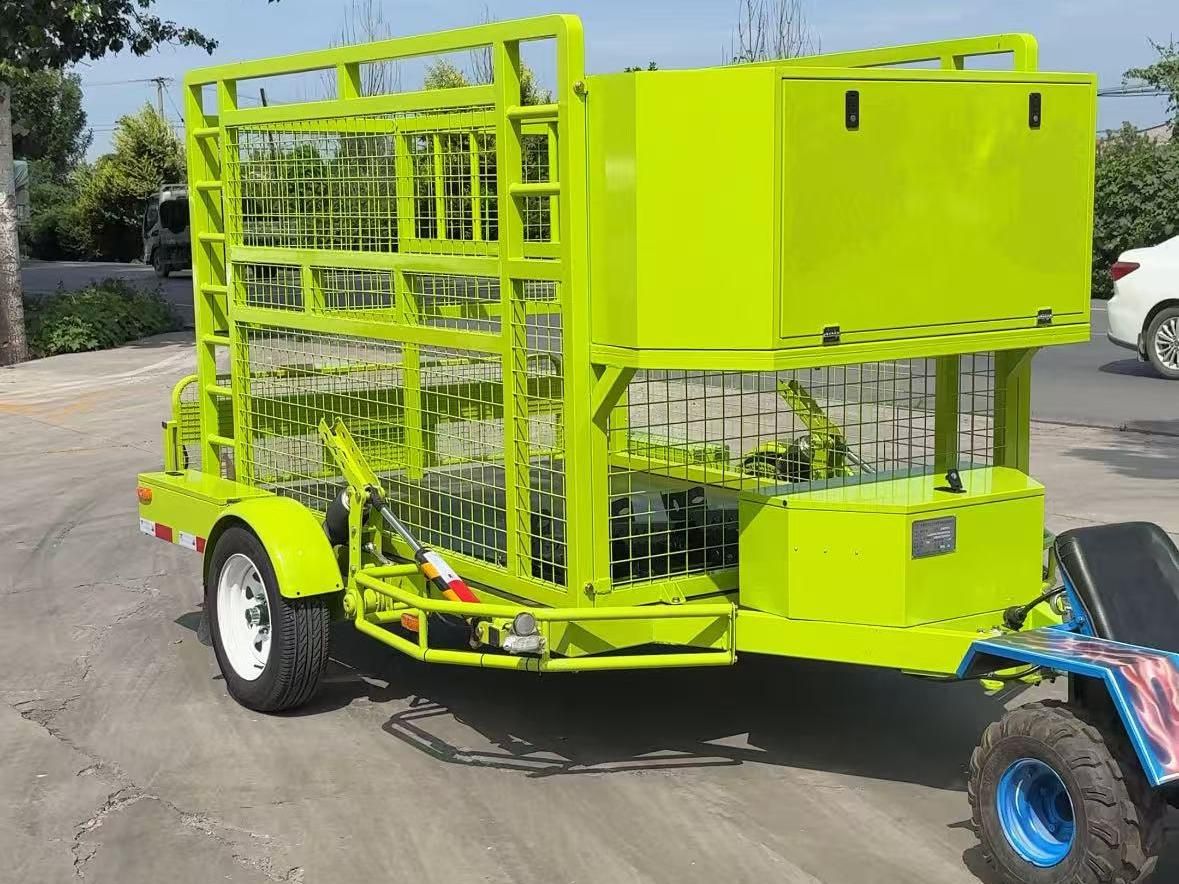
The first thing you notice is that it doesn't hesitate. Load it to the top of its rating, and the platform still rises with the same steady, almost stubborn motion it had when empty. No lag, no whine, no waiting for pressure to build. That matters when a shift is long and the pallets keep coming.
The controls feel direct, not mushy. A slight nudge on the lever moves the carriage just enough to line up with a rack, and it holds position without drifting. You can set a load down gently instead of dropping it the last half inch. After a few hours, your arm isn't fighting the machine; the machine is following your lead.
Maintenance is straightforward because the design doesn't hide its wear points. Hoses, seals, and pivot pins are within reach, and the frame is built thick enough that minor bumps don't throw anything out of alignment. It's the kind of lift that keeps a steady pace on day forty the same as it did on day one.
One-Person Loading Without a Single Backache
Forget the days of bracing yourself before lifting anything heavy. The right approach turns what used to be a two-person job into a smooth solo task. You keep your spine neutral, let your legs do the work, and let a simple lever or wheeled base handle the weight. No twisting, no jerking—just a steady pull or push that leaves your lower back out of the equation entirely.
What really makes the difference is how the load sits and moves. When the item is already elevated at waist height or rolling on wide, stable wheels, you're not fighting gravity from a crouch. You guide it, tilt it slightly, and roll it where it needs to go. The strain that used to creep into your shoulders and lumbar area simply doesn't show up because you're not using your back as a crane.
Even awkward shapes—long boxes, heavy appliances, bulky furniture—become manageable once you stop lifting and start leveraging. A well-placed strap, a low-friction surface, or a fold-out ramp can do the heavy thinking. The goal isn't to be stronger than the object; it's to outsmart it. That's how one person moves a full load and still stands up straight at the end of the day.
Strapped Down and Rock-Solid at 70 MPH
At 70 mph, the usual highway jitters disappear. The load is cinched tight—every ratchet strap checked twice—and the car tracks straight without a hint of sway from the roof carrier. You can feel the tension in the straps through the chassis, but it’s a dull, reassuring pull rather than a vibration.
Crosswinds off passing semis hit hard, yet the front tires stay planted. There’s no floating sensation, no corrections needed at the wheel. What’s up top behaves like part of the car, not something fighting against it. That kind of stability at speed isn’t luck—it comes from spreading the load evenly and keeping the strap angles low.
From Sport Bikes to Cruisers: What Fits the Model 100
The Model 100 doesn't care what badge is on your tank. Throw a leg over a tucked-in sport bike with clip-ons and rear-set pegs, and the riding position stays aggressive without turning your wrists into glass after an hour. The bike's geometry keeps the front end planted mid-corner, yet the suspension soaks up the choppy pavement that usually rattles your fillings loose on a 600cc supersport.
Now swing onto a laid-back cruiser with forward controls and a pullback bar. The Model 100 shifts character without a single parts swap. The seat's contour lets you slide back and sink into the ride, while the engine's low-end grunt means you're not constantly hunting for the right gear. It's the rare machine that feels just as at home idling through a beach town as it does carving a mountain pass.
What makes this range possible is the frame's neutral backbone. The steering head angle and swingarm pivot sit in a sweet spot that doesn't punish aggressive inputs or sluggish countersteering. You get a bike that adapts to your mood, not the other way around. Whether you're chasing knee-down heroics or a sunrise run to the diner, the Model 100 simply asks how far you want to go today.
Rust, Wear, and Tear: How It Holds Up Over Time
Most people assume that anything made of metal will eventually rust, but the reality depends heavily on the specific alloy and the conditions it faces. Take stainless steel, for instance—it contains chromium, which reacts with oxygen to form a microscopic, self-healing layer that blocks moisture and salt from reaching the iron beneath. That's why a well-made stainless kitchen knife can sit in a humid drawer for years without a single orange speck, while a cheap carbon steel blade starts showing rust after one forgotten washing.
Wear is a different beast altogether. Even the toughest materials lose surface material through repeated friction, but the pattern matters more than the total amount. A cast iron skillet actually improves with use because the polymerized oil fills in microscopic pores, creating a smoother cooking surface over time. On the other hand, a painted metal railing on a busy stairwell will show wear exactly where hands grab it, and once the paint chips, rust follows within months—not because the metal is weak, but because the protective coating has been breached in a predictable spot.
Tear, or mechanical fatigue, comes from repeated stress cycles rather than a single overload. Think of a metal garden gate that swings thousands of times a year: the hinge pin doesn't break on the first swing, but after enough cycles, tiny cracks form at the point of highest stress and grow until the pin snaps. That's why well-designed outdoor hardware uses thicker pins or bushings at pivot points, and why cheap pot metal handles on toolboxes crack after a couple of seasons while forged steel ones last decades. In the end, how metal holds up over time isn't just about the material—it's about how the design anticipates rust, wear, and tear in the specific environment where it will live.
FAQ
The key difference is the semi-drop deck combined with a hydraulic lift, which lowers the rear section close to the ground for a nearly flat loading angle. You don't have to muscle a heavy bike up a steep ramp, and the deck returns to a higher ride height once you start towing, so you keep decent ground clearance on the road.
You position the trailer, release the hydraulic pressure, and the rear portion of the deck drops down. That creates a low threshold for the front wheel. Once the bike is rolled on and secured, you pump the lift back up or use the powered option if equipped, and the deck locks into travel position.
Yes, that's the whole point of the semi-drop design. The low entry angle means you can walk the bike up under its own power or even push it in most cases. A solo rider can keep both feet on the ground and control the bike without fighting a tall ramp.
It typically comes with a front wheel chock and multiple D-ring anchor points positioned for forward and rear straps. The chock holds the front wheel straight, while the D-rings let you cross the straps for lateral stability. Many owners add a second chock if they occasionally carry two lighter bikes.
Not normally. Once the hydraulic lift is raised and locked, the deck sits at a standard trailer height. The drop is only used for loading and unloading, so you don't sacrifice clearance over speed bumps or uneven driveway aprons when the deck is in travel mode.
Mostly just keeping the fluid level checked and the fittings clean. You might need to bleed the system once a year if the lift feels spongy, and a light coat of grease on pivot points helps. It's less involved than maintaining a full air-ride setup, but a quick inspection before a long trip is worth it.
For regular but not daily use, it hits a sweet spot. You get the convenience of a low load angle without the cost and complexity of a full drop-deck or enclosed lift trailer. It's easy to store when not in use and tows behind a half-ton truck or mid-size SUV without drama.
Conclusion
The Model 100 semi-drop hydraulic lift trailer turns bike hauling into a one-person job that doesn't leave you gasping for breath or digging for ibuprofen. Lower the deck, roll your bike on, and ride out—no ramps, no wrestling, no borrowed backs. The hydraulic system does the heavy lifting, dropping the platform to ground level so you can walk your machine straight into place. Whether it's a stripped-down sport bike or a full-dress cruiser, the chock points and tie-down anchors align without guesswork, and once you cinch the straps, the load stays rock-solid at highway speeds. You don't need a pit crew or a gym membership to load up and leave.
What separates this trailer from the pack isn't just the lift mechanism—it's how the whole thing survives season after season of road salt, rain, and sun. The frame and deck coatings resist pitting and corrosion, hinges and pivot points are greased and sealed, and the wiring is tucked away from spray and debris. After thousands of miles, the deck still drops smoothly, the latch still snaps shut, and the straps still hold their tension. You end up trusting it like a good set of tools: nothing flashy, nothing finicky, just a rig that works as hard as you do and never makes loading a bike feel like an event. That's the whole point of effortless hauling—getting there without the trailer becoming the story.
Contact Us
Contact Person: Ethan
Email: [email protected]
Tel/WhatsApp: +86 13963964935
Website: https://www.wholechaintech.com/