

Bulk Batch Off Cooler: How to Maximize Cooling Efficiency in Bulk Processing
2026-10-20
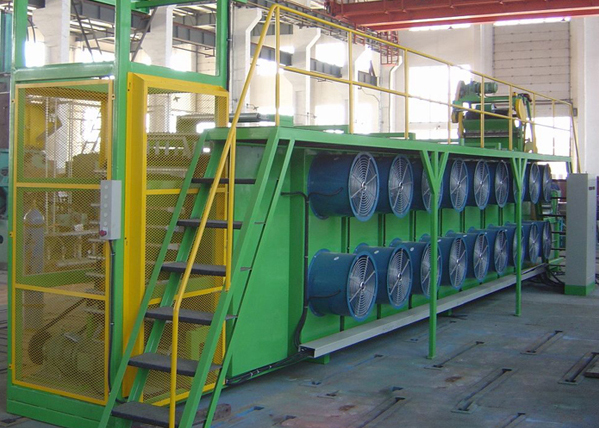
Every degree of heat left in a batch is money walking out the door. Yet many bulk processing facilities accept sluggish cool-down times and inconsistent output as normal. This guide explores how a well-designed bulk batch off cooler slashes cycle times and boosts throughput—and where SFC fits into that equation.
The Real Reason Your Off Cooler Misses the Temperature Mark
Most people assume the unit is underpowered or broken when the air blowing out isn't as cool as the spec sheet promises. But the real culprit often hides in plain sight: the wetting pattern on the cooling pads. If water doesn't spread evenly across the entire media surface, you end up with dry channels where air passes through without any evaporative cooling. A cheap or clogged distribution bar, or even a slightly tilted pad frame, can leave half the pad bone-dry while the other half drips. That uneven saturation means the outgoing air temperature spikes well above the theoretical wet-bulb depression.
Another overlooked factor is the incoming water temperature itself. Many off-grid coolers rely on a small reservoir that heats up over hours of operation, especially when the pump runs continuously. Warm water can't absorb as much heat during evaporation, so the cooling efficiency drops sharply as the day progresses. Some users top up with cold water from a separate tank and see an instant improvement, which proves the point: it's not the fan or the motor that's falling short, it's the thermal load on the water supply.
Finally, the exhaust path matters far more than people realize. If the cooler is tucked into a corner with limited clearance behind the pads, the hot, humid air pushed out the back gets recirculated into the intake. That raises the entering air's wet-bulb temperature, and since evaporative cooling can only lower the temperature to the wet-bulb, the whole cycle becomes less effective. Pulling the unit away from walls, using a short duct, or even adding a small deflector can drop the output temperature by several degrees without touching a single internal component.
Airflow Dead Zones in Bulk Cooling and How to Fix Them
Most cold storage facilities rely on a straightforward assumption: if the refrigeration system is running, the entire room must be cooling evenly. That assumption falls apart the moment you walk into a bulk storage area and notice warm pockets near the ceiling corners or behind tall pallet stacks. These are airflow dead zones, and they don't just waste energy—they create moisture gradients, uneven product temperatures, and a breeding ground for condensation that often goes unnoticed until spoilage or structural damage appears.
Dead zones typically form where air has no reason to move. High-density racking pushed too close to walls, solid shelving that blocks return air paths, or even a poorly placed evaporator fan can leave entire sections stagnant. The fix is rarely about adding more cooling capacity; that often makes things worse by increasing air velocity only in the already-active zones. Instead, look at the geometry of the space: are there deflectors to direct air around obstacles? Are the air return grilles clear of product? One practical step is to use smoke pencils or handheld anemometers to map velocity at different heights and depths. You'll often find that moving a fan or adding a simple air sock changes the entire circulation pattern without touching the compressor.
For stubborn dead zones in large bulk storage, consider passive airflow guides or low-velocity high-volume fans mounted at critical junctions. In some cases, rearranging pallet rows to leave a six-inch gap along the wall is enough to let air wrap around the perimeter. Don't ignore temperature stratification near the floor; cold air sinks, so a dead zone at ground level might need a small recirculation fan angled slightly upward to break the layer. Monitor after any change for at least 24 hours, comparing sensor readings from previously stagnant spots to the rest of the room. A good fix should bring those readings within one or two degrees of the target without overcooling the active zones.
Batch Loading Patterns That Unintentionally Add Hours
Most teams don't set out to make their batch jobs slow. It happens quietly, through small decisions in how data gets pulled, transformed, and written back. A loop that fetches one record at a time feels harmless during testing, but under real volume it compounds into minutes of waiting for every thousand rows. The same goes for loading an entire dataset into memory before processing, which forces the system to pause while it gathers everything instead of streaming pieces through.
Another common slowdown comes from re-querying the same lookup tables inside a loop, or opening a fresh connection for each insert instead of reusing one. Each of these patterns adds tiny overhead that looks negligible on a dashboard but stacks up when a job runs hourly or nightly. The result is a process that technically completes, yet eats away at the time available for downstream tasks, reporting, or simply getting someone out the door at a reasonable hour.
The fix usually isn't a rewrite. It's recognizing where the batch logic fights against how databases and networks actually perform. Switching to bulk operations, caching lookups in memory, or processing rows in smaller chunks can remove surprising amounts of latency without changing what the job does, only how it moves data.
Cleaning Coils and Fins: The Maintenance Task Most Plants Skip
Walk through almost any industrial facility and you'll see spotless floors, organized tool cribs, and gleaming control panels. Yet peek behind the access doors of air handling units or condensers, and a different story unfolds. Condenser and evaporator coils, along with their delicate aluminum fins, are caked in a gray mat of dust, oil film, and sometimes even biological growth. This neglect isn't laziness — it's simply that coil cleaning rarely makes the preventive maintenance checklist. When budgets tighten, it's one of the first tasks to get postponed indefinitely. But skipping it quietly drains energy budgets and shortens equipment life far more than most plant managers realize.
The physics is straightforward but relentless. Coils and fins exist to transfer heat efficiently. Every layer of grime acts as an insulator, forcing the refrigeration or HVAC system to work harder to achieve the same temperature differential. A thin film of oil from nearby compressors or kitchen exhaust can reduce heat exchange efficiency by 10–15 percent. Thick dust mats can cut it by 30 percent or more. The compressor then runs longer cycles, amperage climbs, and discharge temperatures rise. Over time, this leads to premature valve wear, oil breakdown, and even motor failures. In humid environments, the trapped debris also holds moisture against the aluminum, accelerating corrosion and pitting. What starts as an efficiency problem becomes a capital replacement problem.
Bringing coil and fin cleaning back into the maintenance rotation doesn't require exotic equipment or expensive chemicals. A soft brush, a low-pressure garden hose, and a pH-neutral coil cleaner handle most buildup. For stubborn grease, a mild alkaline solution followed by thorough rinsing works well. The key is to schedule the task before performance drops noticeably — ideally twice a year for dusty environments, and at least annually everywhere else. Some plants tag each unit with a small log showing the last cleaning date and measured pressure drop across the coil. That simple visual cue transforms an invisible chore into an accountable routine. When fins are straightened and coils breathe freely again, the drop in energy use and the quieter, cooler compressor operation make the case better than any spreadsheet.
Control Loop Tuning for Off Cooler Temperature Stability
Off cooler temperature instability often comes down to how the loop reacts to small disturbances, not just the setpoint. Many plants chase faster response and end up with an integral time that is too short for the process dead time. A better starting point is a simple open-loop bump test: move the cooling valve a few percent, record how long it takes the temperature to begin moving and how far it eventually travels. Those two numbers, dead time and process gain, tell you more than any default parameter list.
For most off coolers, a conservative PI structure works well. Skip derivative unless the temperature signal is exceptionally clean and fast; otherwise it amplifies noise and makes the valve hunt. Set the proportional band wider than you think necessary, then bring in integral action slowly. If the temperature begins to cycle after adding integral, back it off by at least twenty percent and watch for a full cycle. A sluggish response with zero overshoot is far better than a fast loop that constantly swings around the target.
Disturbance rejection matters just as much as setpoint tracking. Cooling water supply temperature, ambient air changes, and upstream process load all push the off cooler away from steady state. After you have stable baseline tuning, introduce one realistic disturbance and observe recovery. If the loop overcorrects, increase the integral time; if it takes too long to settle, reduce proportional band slightly. Log the temperature trend for a few days before and after tuning, and compare the standard deviation, not just the visual appearance of the curve.
Low-Cost Upgrades That Make an Old Off Cooler Run Like New
Most tired off-road coolers don't need replacing—they just need a few cheap fixes. Start by pulling the cover and blowing out the condenser fins. Dust and trail grit choke airflow, forcing the compressor to work harder and cycle longer. A can of compressed air or a soft brush costs less than ten bucks and often restores cooling speed immediately. If the fins are bent, a fin comb from an auto parts store straightens them in minutes.
Next, check the door seal. A worn or warped gasket lets cold air escape, and the unit runs nonstop fighting the leak. Run a dollar bill along the seal; if it slides out easily, replace the gasket or add a stick-on weatherstrip. Also, upgrading the tiny factory fan to a quieter, higher-flow computer fan drops temperatures and noise. Finally, replace the 12V plug with a marine-grade locking socket to prevent voltage drops that make the compressor strain.
Don't overlook insulation. Many older portable fridges have thin walls that bleed cold through the shell. Adding a layer of closed-cell foam board to the inside of the lid or the exterior sides can cut runtime by a third. Even a simple reflective blanket over the top on hot days keeps the compressor from overworking. These small changes cost very little but turn a sluggish cooler into a reliable trail companion.
FAQ
It pulls heat out of a large, discrete batch of product after a heating step—think roasted nuts, pellets, or extruded feed—using forced air or water-cooled surfaces until the batch reaches a safe handling or packaging temperature.
Watch for longer-than-expected cooling cycles, hot spots when you dig into the batch, condensation on bin walls, or product clumping. If discharge temperatures drift above your target even after a full cycle, airflow distribution or heat load likely needs attention.
Both matter, but for bulk solids, air distribution usually wins. High velocity through one channel can bypass the core, while high volume spread evenly across the bed removes moisture and heat more uniformly. Aim for balanced airflow per square foot of product surface.
Moisture acts as an evaporative coolant—when surface water evaporates, it carries away a lot of heat. But too much moisture can cause sticking, crusting, or uneven airflow. The sweet spot is often a slight surface moisture that evaporates early in the cooling cycle without leaving clumps.
Smaller layers or staged filling usually cool faster because the distance from the center to the air stream is shorter. If your process allows, filling the cooler in controlled lifts or using internal baffles to break up the mass can reduce cycle time significantly.
Warm, humid air has less capacity to absorb both heat and moisture. On hot days, you may need higher airflow, longer residence time, or chilled water in a heat exchanger. Monitoring dew point helps predict when evaporative cooling will stall.
Keep air inlets and exhaust screens clean, check fan belts and damper positions, inspect distribution plates for plugging, and calibrate temperature probes. Even a 10% drop in airflow from dust buildup can add minutes to every batch.
Often yes. Adding variable frequency drives to fans, installing better air plenums or turning vanes, upgrading controls for staged cooling, or fitting internal agitators can raise throughput without replacing the entire vessel. Start with an airflow audit to find the bottleneck.
Conclusion
Getting a bulk batch off cooler to hit and hold its target temperature rarely comes down to a single glaring fault. More often, the gap between setpoint and actual product temperature is the cumulative result of overlooked airflow patterns, loading habits that quietly fight the equipment, and coils or fins that have been starved of attention for months. When pallets or bins are stacked too tightly against the inlet or arranged in uneven rows, portions of the batch simply never see the designed air velocity. Those dead zones aren't just minor inefficiencies—they force the control system to overcompensate, driving chillers harder while some product remains warm. The fix starts before the first bin enters: mapping the airflow with simple smoke tests or velocity probes, then adjusting batch spacing and stacking guides so every cubic foot of product gets turbulent, well-distributed air.
Maintenance is where most plants leave real performance on the table. Coils and fins clogged with dust, fiber, or process residue can cut heat transfer by twenty percent or more before anyone notices a difference on the floor. A monthly cleaning routine using low-pressure water or compressed air—never high-pressure that bends fins—restores the off cooler's original capacity without capital expense. On the controls side, tuning the loop aggressively enough to respond to load changes without hunting is an art that pays back in stability. Finally, low-cost upgrades like variable-speed fans, better inlet baffles, and discharge temperature sensors placed in the true mixed-air stream can make an old cooler behave like a new unit. None of these changes require a rebuild; together they turn a mediocre batch cooler into a reliable, repeatable part of the process.
Contact Us
Contact Person: Chen Zhengwei
Email: [email protected]
Tel/WhatsApp: +86-13963975727
Website: https://www.sfcrubbermachine.com