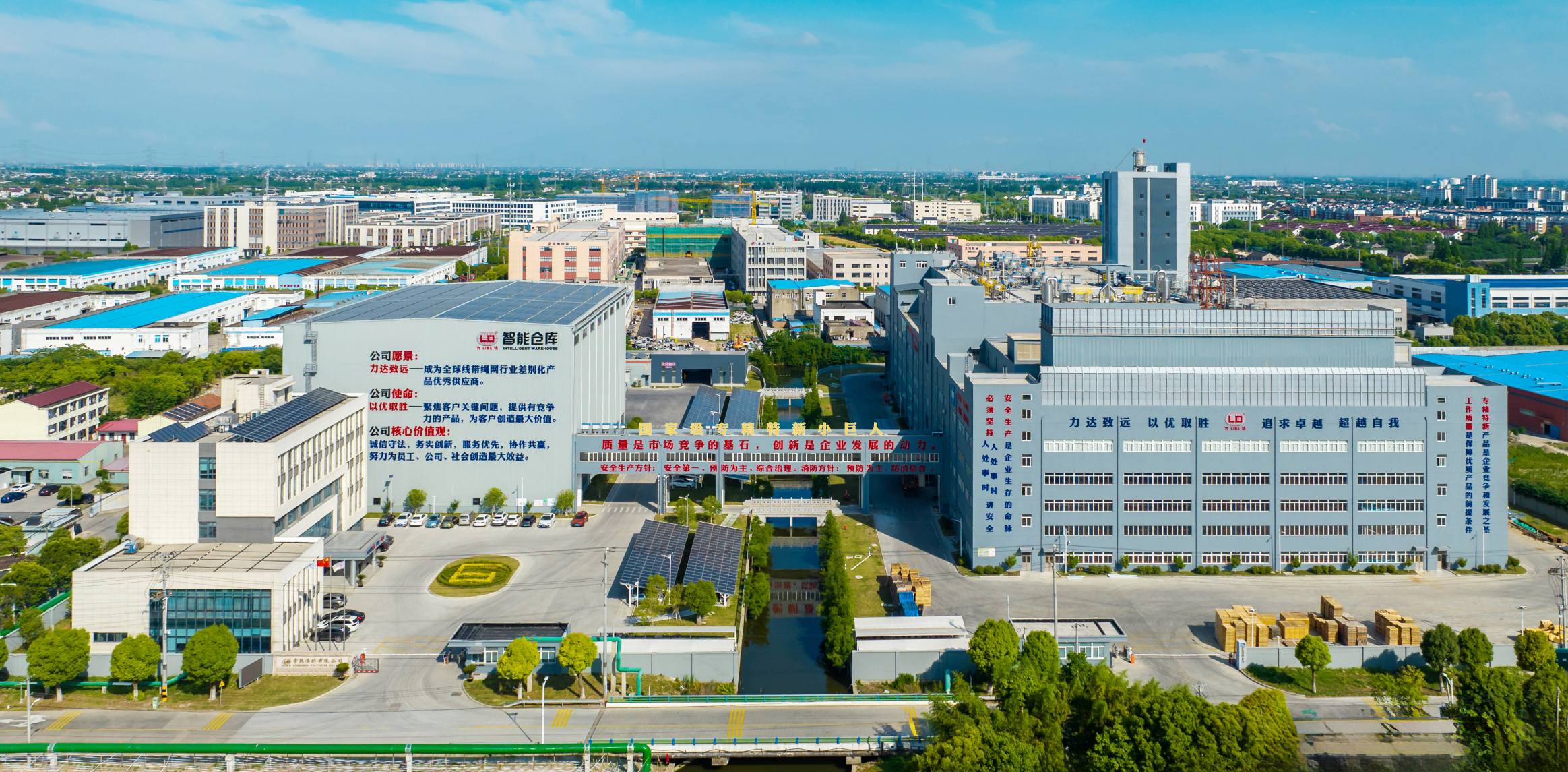

High Tenacity Total Bright Filament Yarn Factory: A Complete Guide to Production and Applications
2026-09-15
What if the strength of a single filament could mean the difference between a safe load and a catastrophic failure? High tenacity total bright filament yarn is exactly that kind of unsung hero—used in everything from automotive seat belts to heavy-duty slings and geotextiles. In this guide, we walk through how it's produced at a modern factory, what makes 'total bright' and 'high tenacity' more than just industry jargon, and where these yarns show up when reliability is non-negotiable. Along the way, you'll see how Changshu Polyester turns raw polymer into filament that holds up under real-world stress.
Raw Polymer Choices That Set the Strength Baseline
The backbone chemistry of a raw polymer sets a hard ceiling on mechanical performance long before any compounding or molding takes place. Polyamides, for instance, derive a significant portion of their tensile strength from interchain hydrogen bonding between amide groups, something a simple polyolefin like polypropylene cannot replicate. Even within a single polymer family, choices around comonomer content, tacticity, and chain branching shift the baseline by altering crystallinity and chain packing. A highly isotactic polypropylene will consistently outperform its atactic counterpart in stiffness and creep resistance because the regular stereochemistry allows tighter lamellar growth.
Molecular weight and its distribution introduce another layer of control. Higher molecular weight generally raises tensile and impact strength, but pushing too far creates viscosity problems during processing that can introduce weld-line weaknesses. Some suppliers sidestep this by offering bimodal distributions that combine a high-molecular-weight fraction for strength with a lower-molecular-weight fraction for flow. Residual catalyst metals, end-group chemistry, and even trace levels of moisture in the raw pellets can later manifest as premature brittle failure, meaning the strength baseline is genuinely determined at the polymerization stage, not fixed afterward by additives.
Inside the Spinning and Drawing Sequence
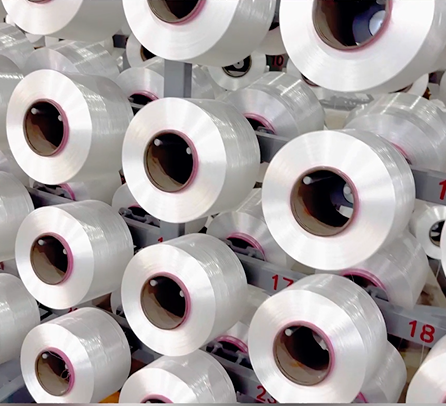
The spinning and drawing sequence begins with polymer melt being forced through a spinneret, where fine jets solidify almost instantly upon contact with cool air. What emerges is not yet a usable fiber but a fragile, semi-oriented filament with uneven molecular chains. The real transformation happens millimeters below the spinneret face, where a controlled tension is applied to pull the filaments into alignment while they are still pliable. This is the first whisper of strength being written into the material's structure.
As the filaments travel downward, they pass through a series of godet rolls rotating at slightly different speeds. The speed differential is not dramatic, but it is precise enough to stretch each filament by a factor of three to five times its original length. During this stretch, the polymer chains slip past one another, then lock into a parallel arrangement. Heat is often introduced at this stage—not enough to melt, but sufficient to encourage molecular mobility. The fiber’s diameter shrinks, its surface becomes smoother, and its tensile strength climbs sharply. Any residual solvent or moisture is driven off in the same pass, leaving behind a leaner, denser core.
A final relaxation step prevents the newly drawn fiber from retaining too much internal stress. If you skip this, the yarn will shrink unpredictably later, causing fabric distortion. So the line includes a short zone where tension is deliberately reduced while temperature is held steady, allowing the molecules to settle into a stable, low-energy state. The result is a filament ready for winding—uniform in denier, consistent in elongation, and capable of surviving the downstream processes of weaving or knitting without surprise.
Why Total Bright Finish Changes Handling and Appearance
The shift to a total bright finish isn't just a visual upgrade—it fundamentally alters how light interacts with the surface. Unlike satin or matte textures that scatter reflections, a full gloss coat creates a mirror-like plane. This means every contour and curve gets highlighted with sharp, traveling highlights, making the shape feel more sculpted and dynamic. The appearance becomes almost liquid, with edges that seem to glow when viewed from different angles.
Handling perception changes because smooth, high-gloss surfaces tend to feel slicker and cooler to the touch. The lack of micro-texture reduces tactile grip, so your fingers glide rather than catch. On top of that, the reflective quality can trick your proprioception—your brain reads the mirrored surroundings as a sign of low friction, which makes the object feel lighter or more delicate than a textured counterpart. This is especially noticeable on control surfaces like knobs, handles, or steering wheels.
There's also an acoustic and maintenance ripple effect. Bright finishes amplify the sense of hardness; a light tap produces a crisper, higher-pitched ring compared to a softer matte surface. And because every fingerprint, dust speck, or micro-scratch becomes instantly visible, the perceived quality depends on constant upkeep. That heightened vulnerability actually changes how people interact with the object—they hold it more carefully, use two hands, or avoid touching it altogether unless necessary.
Quality Checks That Separate Premium Yarn from the Rest
Premium yarn rarely announces itself in the skein. It reveals itself under tension, in a shift of light, or after the tenth pass through your fingers. One of the first checks I do is stretch a single strand slowly against a dark background. Cheap yarn tends to show uneven thickness, tiny slubs, or a fuzziness that looks like static. Good yarn holds its line, with fibers lying parallel and no surprise bumps. If it snaps with a dull, inconsistent resistance rather than a clean break, that tells you more than any label ever will.
The next round is less about feel and more about endurance. I take a length from the middle of the ball, not the easy-to-inspect outer layer, and run it through a simple snap test: wrap it around both hands, give it a sharp tug, and listen. Premium yarn has a certain pitch to the snap—it's tight and almost musical. Then there's the rub test for colorfastness. Wet a white cloth, press it against the yarn, and hold for a few seconds. If the dye transfers even slightly, it's not a premium skein. Finally, I check twist consistency by rolling a short piece on a flat table. A well-spun yarn will roll straight; inferior twist causes it to veer or wobble.
The real separator, though, is batch consistency. A single beautiful skein is easy. Ten skeins from different dye lots that match under both daylight and warm indoor light—that's rare. I always compare the first and last skein in a shipment side by side. Premium mills understand that a knitter's trust dies faster from one mismatched sleeve than from a slightly higher price. So they check, recheck, and then check again until the yarn behaves the same way every single time.
Applications Where Tenacity and Luster Carry the Load
Tenacity and luster don't just describe a fabric's appearance—they define its performance under pressure. In high-wear environments like luxury hotel lobbies, executive office suites, and first-class airline seating, materials must shrug off constant friction while keeping that just-unwrapped sheen. The balance is rarely accidental; it comes from tightly twisted yarns and dense weaves that resist pilling and surface dulling, so the piece looks as polished at hour ten as it did at hour one.
Think of a velvet banquette in a busy restaurant: lesser textiles show shiny bald spots within months, but a well-engineered velvet with a short, dense pile holds its depth of color and soft gleam through thousands of covers. The same principle applies to high-traffic residential choices—a statement sofa in a sun-drenched living room where family movie nights and pet naps test both the fiber's backbone and its glow. Here, stain-resistant finishes and solution-dyed fibers do the quiet work of preserving luster without sacrificing the tactile richness that makes the piece feel special.
What separates durable luxury from fragile flash is how the material ages. A premium fabric's luster should deepen with use, not fade into patchy highlights. That's why designers lean on wool blends, performance velvets, and tightly woven synthetics for pieces meant to anchor a room—they carry the visual load while standing up to real life, so the investment reads as intentional rather than precious.
Keeping Consistency When Output Scales Up
The moment output scales, small inconsistencies stop being harmless. One writer uses sentence case, another switches to title case. One explains a feature in three steps, another buries the same detail in a paragraph. What keeps this from becoming chaos isn’t a thicker rulebook—it’s a small set of concrete examples that show exactly what “on-brand” looks like in real passages.
A style guide helps only if it’s easy to search and tied to actual decisions. We started keeping a shared doc with before-and-after snippets: a headline that works, a call-to-action that doesn’t, a tone shift that was rejected. Reviewing a sample of published pieces every two weeks catches drift early, when it’s still just a habit rather than a full rewrite.
Readers may not name consistency, but they feel it. When the voice stays steady across dozens of pages, the content starts to read like one person thinking clearly, not a committee juggling formats. That reliability becomes part of the product, and it’s much easier to preserve than to retrofit after the volume has already spiked.
FAQ
This yarn is made from continuous filaments engineered for exceptional tensile strength. The total bright designation refers to the high-luster finish achieved without dulling agents. Compared to standard polyester yarn, it offers significantly higher breaking strength, lower elongation, and a glossy surface that appeals in both technical and decorative uses.
You can't shortcut any of the core stages: polymer drying, melt spinning with tight temperature control, quenching, multi-stage drawing, and heat setting. If drawing or heat setting drifts, the molecular alignment suffers and so does the tenacity.
It shows up in automotive seat belts, airbags, tire cords, conveyor belts, marine ropes, safety harnesses, geotextiles, and heavy-duty sewing threads. The bright finish also makes it suitable for webbing, luggage straps, and certain sports equipment.
It comes down to raw material consistency, real-time monitoring of spinning tension and draw ratios, and destructive testing on every batch. Most serious factories pull samples from multiple positions on each bobbin and plot the data, reacting to any drift before it becomes a bad lot.
The high-luster surface isn't just for looks. It often indicates a cleaner polymer with fewer additives, which can translate to better fiber-to-fiber friction characteristics and improved visibility in safety-critical products. It also allows easier dyeing for high-visibility colors.
You want to see automated draw winding, an in-house lab with calibrated tensile testers, and clear traceability back to polymer lots. A clean extrusion hall and operators who can explain their process adjustments are better indicators than a glossy brochure.
Yes, customization options include denier range, filament count, twist level, finish type, and even UV stabilization or flame retardant additives. A capable factory will ask about your end-use performance requirements before recommending a construction.
Temperature and humidity fluctuations can alter quench air and filament cooling rates, leading to variation in crystallinity and tenacity. Well-managed factories maintain tight climate control and filter the quench air to prevent surface defects.
Conclusion
High tenacity total bright filament yarn begins with polymer selection, where the molecular weight and purity of the base resin set a hard ceiling on achievable strength. Factories often favour high-viscosity polyester or polyamide chips, because longer polymer chains translate directly into fewer weak points along the filament. From there, the spinning and drawing sequence dictates how well that potential is realised: precise melt temperature control, uniform quench air, and multi-stage drawing with carefully managed draw ratios align the molecular chains. This alignment is what turns a merely strong yarn into a high tenacity one, while also stabilising elongation and shrinkage. The total bright finish adds another layer of practical value—higher TiO2-free clarity, lower delustrant content, and a smoother surface that shifts light reflection. That luster is not cosmetic; it changes how the yarn handles on high-speed weaving or knitting machines, reducing friction and static buildup while giving fabrics a crisp, premium look.
Quality control in a dedicated factory separates premium output from commodity filament. Testing goes beyond simple denier and strength checks to include elongation at break, hot air shrinkage, inter-filament tension consistency, and dye uptake uniformity. These checks are run continuously, not just at final inspection, because subtle drift in quench temperature or draw roll speed can create weak spots that only appear downstream. Such rigour pays off in applications where both tenacity and luster carry real load: industrial webbing, high-end luggage, automotive seat belts, sailcloth, and technical sports fabrics. In these uses, the yarn must survive abrasion, UV exposure, and repeated loading without losing sheen or integrity. Scaling production without losing these properties demands tight process windows, automated doffing, and statistical monitoring of every spinneret position. A factory that treats raw polymer choice, drawing precision, bright finish control, and continuous testing as one integrated system can consistently deliver yarn that meets both mechanical and aesthetic demands—without the variability that plagues less disciplined operations.
Contact Us
Contact Person: CONNIE
Email: [email protected]
Tel/WhatsApp: 86-0512-53671634
Website: https://www.lida-yarn.com/