

Oil-Injected Compressor Factory: Key Factors for Choosing a Reliable Partner
2026-09-30
The cheapest quote rarely comes from the oil-injected compressor factory you’ll still trust five years down the line. What separates a transactional supplier from a genuine production partner often hides in details most buyers overlook—build consistency, service response time, and engineering depth. Before you lock in a contract, consider the factors that determine whether your compressed air system becomes a quiet workhorse or a recurring headache. At Seize Air, we’ve seen how these choices play out on real factory floors, and the patterns are worth examining.
Beyond the Brochure: Verifying Production Depth
A glossy brochure can make any factory look impressive, but real production depth reveals itself in quieter details. Walk the floor and notice how raw materials move: do they flow in a steady, predictable rhythm or bunch up at bottlenecks? Ask about the oldest machine still in daily use and the newest one purchased—not to judge age, but to understand how equipment is maintained, upgraded, and integrated. A facility that genuinely produces at scale will have visible evidence of continuous improvement, from shadow boards with worn outlines to shift logs annotated in multiple hands. These small signs tell you whether the operation has weathered real orders, not just photo shoots.
Dig into the supplier's recent production history with specific, testable questions. Request the actual run times for the last three batches of a similar product, including any stoppages and their root causes. Ask to see the scrap or rework records for those batches. A manufacturer with genuine depth will be able to pull this data quickly and explain anomalies without defensiveness. If the answers are vague or the records don't exist, that's a signal the production floor may be thinner than the brochure suggests. Also ask about capacity allocation: what percentage of total output currently serves other clients, and how much headroom exists for a new order without displacing existing work. Depth isn't just about having machines; it's about having spare capacity, trained operators, and a system that can absorb variation.
Finally, test the human layer. Spend a few minutes talking with the line supervisor or a senior operator, not just the sales engineer. Ask them to describe the most challenging production issue they solved in the past year and how they solved it. Listen for specifics—material substitutions, tooling adjustments, scheduling conflicts—rather than generalized claims about quality commitment. A deep production team talks about failures and recoveries with the ease of people who have lived through them. If the only confident voices are in the front office, you may be looking at a trading company with a rented workshop, not a manufacturer with true production depth.
When Oil-Flooded Means Reliable: Testing Protocols That Matter
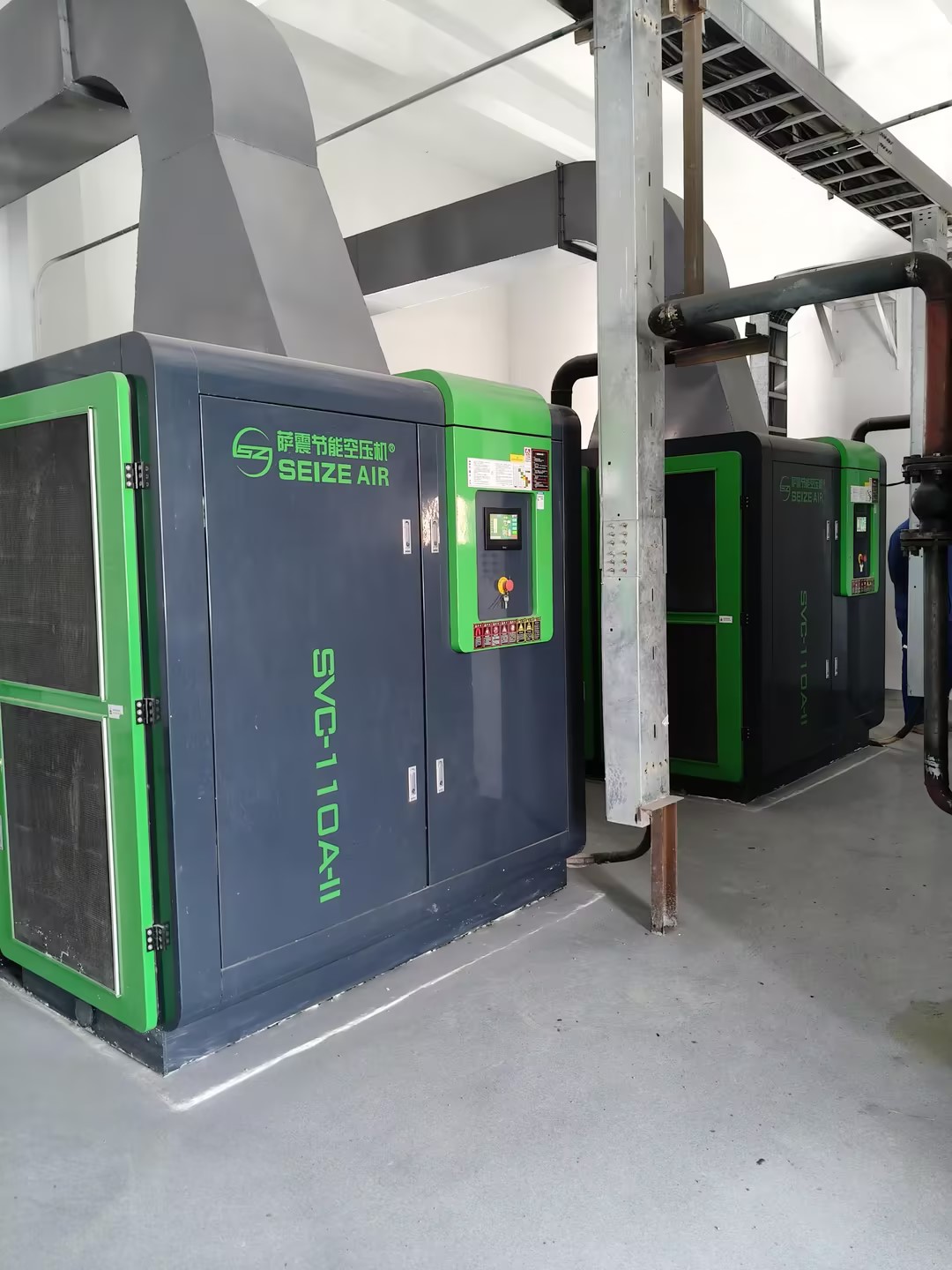
Oil-flooded rotary screw compressors have earned a reputation for dependability in demanding industrial settings, but that trust isn't automatic—it's earned through rigorous testing that goes far beyond a simple pressure check. The protocols that truly matter simulate real-world abuse: thermal cycling under load, prolonged operation at maximum discharge temperature, and repeated start-stop sequences that expose weak points in bearings, seals, and the oil separation system. Without these stress tests, a compressor that runs fine for twenty minutes on a test bench can fail catastrophically after three weeks on a factory floor. The difference between a machine that merely passes a spec sheet and one that survives a decade of service often comes down to whether the manufacturer bothered to test for oil carryover under fluctuating inlet conditions, or measured viscosity retention after hundreds of hours at elevated temperatures. These are the unglamorous details that separate marketing claims from actual reliability.
One frequently overlooked protocol is the endurance test under partial load with contaminated intake air. Many compressors are certified at full load with clean, cool air, but real environments throw dust, humidity, and wildly varying demand curves at the machine. A proper testing regimen forces the compressor to operate at 25% load for extended periods while ingesting particulate-laden air, then monitors oil consumption, discharge temperature stability, and separator element pressure drop over time. Another critical test examines cold-start behavior: after the unit sits overnight in an unheated space, does the oil pump prime effectively? Does the minimum pressure valve open crisply, or does it chatter and cavitate? These failure modes rarely appear in datasheets but account for a large share of field service calls. Companies that take reliability seriously document these scenarios, and their test logs read more like a forensic investigation than a marketing brochure.
Finally, the most telling protocol is often the simplest to describe but the hardest to execute honestly: a sustained full-load run at the upper limit of the ambient temperature rating, with continuous oil analysis at regular intervals. Rather than just checking for metal particles, advanced testing measures acid number, oxidation stability, and additive depletion—indirect indicators of how well the oil-flooded design manages heat and prevents varnish. A compressor that keeps its oil chemically stable for 2,000 hours under these conditions will almost certainly outlast one that only logs a clean 100-hour sample at room temperature. That is why serious buyers ask for test reports, not just certificates. The phrase "oil-flooded" carries a promise of robustness, but only testing protocols that mirror actual operating hell can prove it.
Customization Without Compromise: Engineering Flexibility
Most platforms talk about customization, but they rarely mean it beyond changing a color or swapping a logo. Real flexibility lives in the architecture—the quiet decisions made months before a single user clicks “deploy.” We built our system around a modular core that lets teams reshape workflows, data models, and interface logic without waiting for a vendor roadmap. That means a marketing team can add a custom approval step to a form, while an operations lead changes how inventory syncs across regions, and neither one touches a line of shared code.
The hard part isn’t offering options—it’s making those options hold up under real-world stress. A flexible system that collapses when you rename a field or duplicate a dashboard isn’t flexible; it’s fragile. So we invested in dependency-aware rendering and version-tolerant APIs. Change a label in one place, and it propagates cleanly. Clone a template, and the new instance inherits rules without dragging stale references along. This is the unglamorous work that keeps a “customized” setup from turning into a maintenance nightmare six months later.
None of this should require a developer on standby. The flexibility we care about lives in the hands of the people who actually run the business day to day. A customer success manager can build a new onboarding checklist without filing a ticket. A finance lead can adjust approval thresholds before a quarter-end crunch. When the tools bend to the team—not the other way around—customization stops being a feature and starts being a working habit.
After the Sale: Service Networks That Actually Answer
Most post-purchase support feels like shouting into a void. The phone rings out, the chat bot loops, and the promise of "we're here to help" evaporates the moment the invoice clears. The difference with a service network that actually answers isn't just staffing levels—it's a design choice. Every ticket gets a named human owner, and that owner stays with the problem until it's resolved, not until the timer runs out.
Real responsiveness shows up in the small details: local technicians who call back within the hour, parts depots that keep common spares on shelves instead of in a warehouse three states away, and a dispatch system that treats your downtime as an emergency even when it's technically not. These networks measure themselves by how few times you need to follow up, not by how quickly they close a case number.
The best service organizations also make their answers accessible long after the warranty expires. They publish repair guides that assume no engineering degree, run owner forums where company engineers actually reply, and keep phone lines staffed by people who can override the script. That's the quiet promise behind "after the sale": when something breaks, someone picks up.
Materials and Metallurgy: Where Longevity Begins
The choice of base metals and alloying elements is rarely about chasing a single property. It is about balancing corrosion resistance, fatigue strength, and microstructural stability under real operating conditions. A well-selected stainless steel, for instance, does not simply survive humid environments—it resists pitting and stress corrosion cracking that quietly shorten component life. Every percentage point of chromium, nickel, or molybdenum shifts how the material behaves when temperature cycles, loads fluctuate, and impurities accumulate.
Heat treatment often matters more than the initial chemistry. Quenching, tempering, and controlled cooling transform a merely adequate alloy into one with a refined grain structure and predictable hardness profile. Poorly executed normalization can leave residual stresses that surface as premature cracks years later. Skilled metallurgists read a microstructure the way others read a map: ferrite, pearlite, martensite, and bainite each tell a story of what the metal has endured and how long it will keep performing.
Longevity is not a single decision but a chain of them—melting practice, inclusion control, forging ratio, surface finish, and even the direction of machining marks. Trap a sulfide inclusion near a stress concentration and you have planted a future failure. Refine the grain boundary chemistry and you have bought decades of quiet service. That is why the most durable designs begin not on a drawing board but in a foundry, where raw elements are first persuaded to become something that outlasts expectations.
Traceability and Data: The Paper Trail Behind Every Unit
Every unit that rolls off the line carries more than its physical components—it carries a history. From raw material batches to the exact torque settings on a specific bolt, traceability systems capture thousands of data points per unit. This isn't just about compliance; it's about knowing, for instance, that a batch of capacitors from a particular supplier ended up in units shipped to three different regions. When a fault emerges, that paper trail turns a needle-in-a-haystack search into a targeted recall.
The real value lies in how the data is structured. Instead of dumping everything into a flat log, modern systems link each unit to its process parameters, operator shifts, and even the ambient temperature during assembly. That granularity allows engineers to spot patterns—like a slight drift in calibration that only appears on units built during the third shift. Without that linkage, you'd have boxes of paper and no way to connect the dots.
But traceability isn't just a safety net. It's becoming a selling point. Customers increasingly want to know where their product's components came from, how it was tested, and whether any deviations were handled correctly. The paper trail behind every unit is no longer an internal afterthought—it's part of the product's story, and companies that treat it as a live, queryable asset rather than a static archive are the ones turning data into a competitive edge.
FAQ
Start with the cleanliness and organization of the production floor. Oil-injected compressors rely on tight tolerances, so any dust or clutter often translates into assembly problems later. Ask to see the torque records for critical fasteners and the filtration area where lubricants are stored.
Request a copy of their incoming material inspection logs and final test reports for the exact model you are considering. A trustworthy partner will not hesitate to share data on leak rates, vibration levels, and discharge temperature under load. If they only offer a generic certificate, dig deeper.
Yes, and not just the warranty period. Check whether they stock wear parts like air-end bearings, seals, and oil filters locally or ship them from overseas. Call their service hotline on a weekend and see if a technical person answers. That tells you more than any brochure.
Beyond ISO 9001, look for ISO 8573-1 compliance for air purity if you need clean air, and ASME or PED certification for pressure vessels depending on your region. Also ask if their electrical panels meet UL or CE requirements. Some factories only certify the compressor, not the complete package.
Ask for case studies from clients in your industry—whether it is food processing, pharmaceuticals, or heavy manufacturing. Pay attention to how they handled oil carryover limits or high ambient temperatures. A factory that has only built standard units may struggle with custom requirements.
Find out if they keep sub-assemblies in stock or build everything to order. A reliable partner usually has a buffer of motors, coolers, and control panels, which lets them adjust delivery dates if your project schedule shifts. Ask for the average lead time over the last six months, not just the current quote.
Ask for contact details of two or three past customers who bought similar machines at least two years ago. Then ask those customers about any mid-life failures, how fast parts arrived, and whether the factory honored its performance guarantees. Real-world feedback beats any polished presentation.
Conclusion
Choosing a reliable oil-injected compressor factory demands scrutiny far beyond glossy brochures and polished sales pitches. A genuine partner proves its production depth by showing you the foundry floor, the CNC stations, and the assembly cells where every rotor and bearing seat is machined in-house. Testing protocols matter immensely: you want a manufacturer that runs every unit through full-load, high-temperature, and leak-down tests, not just a quick spin-up on the bench. Customization should never feel like a compromise—look for engineering teams who adjust airend profiles, control logic, or package layouts without treating standard options as sacred. And when your compressor goes down at 2 a.m., the service network must actually answer the phone with a technician who knows your machine's serial number, not a call center script.
Longevity starts in the metallurgy lab. Rotors cast from high-grade ductile iron, bearings rated for continuous duty, and oil separators built from corrosion-resistant alloys separate a ten-year workhorse from a two-year headache. Equally important is traceability: every casting heat number, every torque value, and every test certificate should form a retrievable paper trail. A factory that stamps serial numbers on major components and stores build data digitally gives you the confidence to schedule overhauls predictably, not reactively. In short, the right partner blends honest manufacturing, rigorous validation, flexible engineering, responsive support, and material integrity into one package—no brochure required.
Contact Us
Contact Person: Mia
Email: [email protected]
Tel/WhatsApp: +86 19821985894
Website: https://www.seize-air.com