

Sintered Silicon Carbide Factory: Inside Advanced Ceramic Production
2026-09-27
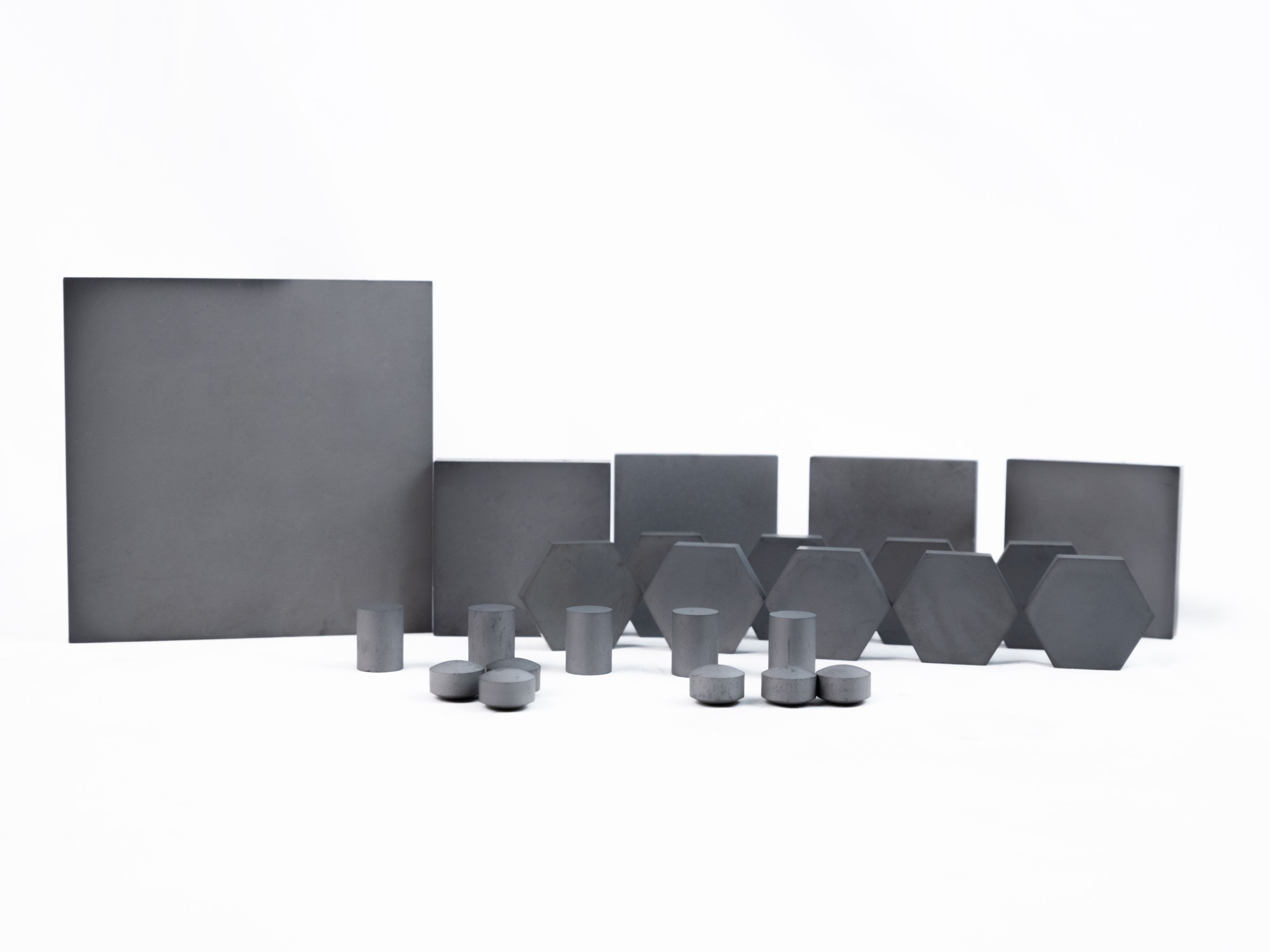
Step past the loading docks and into the heat-treated heart of a sintered silicon carbide factory, and you’ll quickly realize advanced ceramic production is less about molding powder and more about controlling chaos. Every furnace cycle, every micron of grain growth, every cooling curve matters. At HUAYI TECH, that precision isn’t a marketing slogan—it’s a daily operating rhythm. This post takes you inside the process that turns raw silicon carbide into components trusted in semiconductor equipment, mechanical seals, and armor systems. You’ll see why the factory floor, not just the spec sheet, determines whether a ceramic part survives real-world stress.
What Happens Before the Powder Meets the Press
Before the powder meets the press, it goes through a quiet but critical prep stage. Raw material arrives with inconsistent particle sizes, moisture pockets, and sometimes clumps from storage. The first job is to break those down and blend the batch until the chemistry is evenly distributed. A quick sieve analysis or laser diffraction check tells the team whether the particles are uniform enough to flow predictably into the die.
Then comes granulation or dry milling, depending on the material's behavior. Very fine powders tend to bridge or spray unevenly under pressure, so they are often agglomerated into larger, more regular granules. A small amount of lubricant or binder gets mixed in at this point—just enough to help the particles slide and lock together during compaction, but not so much that it weakens the final compact.
Finally, the batch rests in a controlled environment so temperature and humidity stop shifting. Samples are pulled from the top, middle, and bottom of the container to confirm the mixture hasn't segregated. Only after these checks pass does the powder move to the press hopper, ready to be shaped under pressure.
The Art of Shaping a Green Body That Survives
Every potter knows the quiet dread of watching a freshly shaped piece crack during its first night of drying. The difference between a green body that endures and one that fails often lies not in grand gestures but in the unglamorous details: how evenly you wedge the clay, whether you compress the base before lifting the walls, and whether your hands remember to move at a pace the clay agrees with. It is less a technical checklist than a conversation with the material—each push and pull a question, each subtle resistance an answer.
Survival begins long before the wheel stops spinning. Clay with inconsistent moisture pockets will tear under its own weight later, so many throwers spend half their time simply preparing the lump—slamming, folding, working out the air and the stubborn lumps. Then there is the matter of wall thickness: a base that is too thick becomes a reservoir of stress, while one too thin invites collapse. The art is in seeking that elusive middle where the form holds its posture but still breathes. Some potters trim a foot ring as soon as the piece is leather-hard, not just for aesthetics but to redistribute weight and relieve the very tension that kills greenware.
Finally, the drying stage tests every decision made before it. A piece left in a draft will dry unevenly; a rim covered too early will trap moisture and slump. Old hands learn to read the sheen on the surface, to know when to flip a bowl or cover a handle with a strip of plastic. There is no universal recipe, only an accumulation of small attentions that teach a clay body to survive its own transformation. The ones that do are not lucky—they are the result of a maker who understood that survival is shaped, not assumed.
Sintering: Where Heat and Time Do the Heavy Lifting
When a powder compact is heated, the individual particles don't just sit there—they begin to move. The heat gives atoms the energy to vibrate and migrate, especially across the tiny contact points between grains. At these points, called necks, material slowly builds up and welds the particles together. This is the first step in turning a fragile green body into a dense, load-bearing part.
But heat alone isn't enough. The process needs time for diffusion to do its slow, invisible work. Over hours or even days inside the furnace, atoms keep traveling—along grain boundaries, through vacancies, and around pores. Given enough time, those pores shrink and the whole structure densifies. That's why a well-designed sintering cycle carefully balances peak temperature with a long, steady hold.
The real skill in sintering comes from knowing how far to push both variables. Too little heat or too short a hold leaves the part weak and porous. Too much, and grains grow coarse, reducing strength. The best results come from finding the narrow window where heat and time pull together, doing the heavy lifting that turns loose powder into a reliable solid.
Cooling Down Without Cracking the Structure
Pouring a thick concrete slab in summer is less about strength than about patience. The core stays hot long after the surface has started to cool, and that mismatch is where cracks begin.
Instead of blasting the surface with cold water or leaving it exposed to a night breeze, crews often cover the pour with insulating blankets and keep the formwork in place longer. That keeps the temperature drop across the section gradual. Embedded thermocouples track the difference between core and skin, and cooling pipes carry heat away slowly when the gap exceeds a set limit.
The aim is not to rush the structure back to ambient temperature. It is to let every part of the concrete shrink together. Even a few degrees of uneven lag can concentrate tensile stress at the surface, and concrete is far weaker in tension than compression. A pour that cools too quickly may look fine for weeks, then open a hairline crack the first time the load shifts.
Microscopic Inspections That Catch Hidden Flaws
A routine visual check rarely tells the whole story. Microscopic inspections dig beneath the surface, revealing hairline cracks, porosity, or inclusions that would otherwise go unnoticed until catastrophic failure. By magnifying critical zones at 50x to 1000x, inspectors can spot early-stage corrosion, weld undercut, or stress fractures in turbine blades, circuit boards, and medical implants. These hidden flaws often start smaller than a human hair, yet they compromise structural integrity, electrical continuity, or sterility. Without this level of scrutiny, a batch of components might pass a standard tolerance test while carrying latent defects destined to fail in the field.
The real advantage comes from pairing magnification with targeted illumination and contrast techniques. Darkfield, differential interference contrast, or polarized light can turn an invisible surface anomaly into a glaring red flag. For example, a microscopic inspection of a bearing race might reveal micropitting that no naked eye could detect, signaling improper lubrication or material fatigue long before a breakdown. Similarly, on a solder joint, a 200x view can expose a cold solder or a micro-void that would eventually cause an intermittent connection. These inspections are not just about finding flaws; they are about understanding root causes and preventing recurrence.
Documented microscopic inspections also create a traceable quality record. Each image or video capture becomes evidence of due diligence, which matters in regulated industries like aerospace or medical devices. When an auditor asks how you know a component is sound, you can point to a micrograph showing grain structure, coating thickness, or seal integrity. This turns a subjective 'looks fine' into an objective, repeatable verification. In practice, technicians develop an eye for subtle patterns: a slight discoloration, a faint line, an irregular edge. That trained observation, supported by proper optics, is what catches hidden flaws before they become expensive recalls or safety incidents.
From the Factory to Extreme Environments: Final Uses
Some assemblies leave the factory floor looking almost unremarkable—sealed housings, bundled cables, small machined fittings—but their real test starts after installation. A connector rated for a North Sea oil platform spends years fighting salt spray, sub-zero wind, and constant vibration. The same batch might include parts destined for a satellite, where thermal swings of hundreds of degrees alternate with hard vacuum.
Final uses in extreme environments rarely allow for routine maintenance. Mining sensors buried in permafrost, cameras mounted on volcanic slopes, and actuators inside nuclear containment vessels all rely on choices made back in the plant: alloy selection, sealing method, torque settings. Even small oversights become failures at 3,000 meters underwater or on a Martian rover wheel.
That gap between a controlled production line and an unpredictable field site shapes how final assemblies are designed. Manufacturers often test to destruction, then derate for unknowns like abrasive dust, chemical exposure, or solar radiation. The resulting components end up in places where a replacement crew cannot simply be dispatched—so the factory becomes the last stop for quality before the product disappears into service.
FAQ
Raw submicron SiC powder is first blended with sintering aids and a temporary binder, then spray-dried into free-flowing granules. Those granules are compacted by cold isostatic pressing or uniaxial pressing into green blanks. After green machining to near-net shape, the parts enter a furnace that runs above 2,000 degrees Celsius under a controlled argon or vacuum atmosphere. The real craft is managing shrinkage during densification so the fired part lands within microns of the intended profile.
Its combination of extreme hardness, very low coefficient of friction, and near-universal chemical resistance means a sintered SiC seal face can run dry for short periods without catastrophic wear. Unlike oxide ceramics, it resists both hot caustic and strong acids, and its high thermal conductivity pulls heat away from the rubbing interface fast enough to prevent thermal cracking.
The trick is to machine the green body larger than the final size, using shrinkage factors that are validated for each lot of powder and each furnace profile. After sintering, components go through diamond grinding and lapping on dedicated machines, then a coordinate measuring machine checks key dimensions. Any drift in shrinkage is fed back to the green machining stage, so the process self-corrects instead of accepting scrap.
Pressureless sintered SiC starts as a homogeneous powder mix that densifies by solid-state or liquid-phase sintering, giving a dense, single-phase-like body with high strength at elevated temperatures. Reaction bonded SiC, by contrast, uses silicon infiltration into a porous carbon-silicon carbide preform, which leaves residual free silicon in the matrix and usually means lower maximum service temperature and slightly lower corrosion resistance in harsh alkaline environments.
Oxygen is the most damaging because it forms silica layers on particle surfaces and interferes with sintering, leaving weak grain boundaries. Free carbon above a small percentage creates porosity, while metallic impurities like iron or nickel can catalyze abnormal grain growth or form low-melting phases that reduce high-temperature strength. A reliable factory tracks oxygen content, free carbon, and trace metal levels for every incoming lot.
Large complex shapes are possible but costly because green strength is low and sintered SiC cannot be machined economically after firing except by diamond grinding. Factories use injection molding for small intricate parts, slip casting for large thin-wall crucibles, and green machining for prototypes and moderate volumes. True internal undercuts and sharp re-entrant corners remain difficult because they create stress concentrations during densification.
The furnace needs a tight atmosphere with low oxygen and moisture levels, usually measured in parts per million, because oxygen at sintering temperature etches SiC and prevents full densification. Temperature uniformity across the hot zone must stay within a few degrees to avoid warping, and the powder handling area should be humidity-controlled so the spray-dried granules do not pick up moisture and change their pressing behavior.
The profile usually includes a slow binder burnout step up to about 600 degrees Celsius, then a controlled ramp to a peak temperature between 1,900 and 2,200 degrees Celsius depending on the sintering aid system. Holding time at peak is kept short to reach closed porosity without letting grains coarsen excessively. Some recipes use a brief post-sintering anneal at a slightly lower temperature to relieve residual stress and improve fracture toughness.
Conclusion
Before a single grain of silicon carbide enters the sintering furnace, the raw powder goes through rigorous milling, purification, and spray-drying so each batch carries a predictable particle size and packing density. Shaping the green body is where subtle choices matter: cold isostatic pressing or slip casting sets the density gradients that will later decide whether the part warps or stays true. Once the compacted form is loaded into the furnace, temperatures climb past 2,000°C in a controlled atmosphere, and the real work begins. Silicon carbide does not melt; it bonds through solid-state diffusion, so time at peak temperature must be long enough to close pores but short enough to prevent exaggerated grain growth. Cooling is just as deliberate. Rapid thermal gradients set up internal stresses that can fracture a fully sintered ring or plate, so the kiln ramps down over many hours, letting the crystalline structure relax into a stable, dense ceramic.
Even after a flawless furnace cycle, nothing leaves the factory without microscopic scrutiny. Cross-sections are polished and examined under scanning electron microscopes, while ultrasonic and dye-penetrant tests hunt for subsurface voids, microcracks, or density variations that would never be visible to the naked eye. These hidden flaws are what separate a seal that lasts ten years in a chemical pump from one that fails in six months. The finished components, whether they are mechanical seal faces, sandblasting nozzles, semiconductor wafer carriers, or armor tiles, all share the same demand: survive heat, abrasion, and corrosive media without deforming. A sintered silicon carbide factory is less a place of brute force and more a chain of controlled compromises, where every ramp rate, binder burnout schedule, and polishing pass exists to keep the final part from betraying its brittle nature.
Contact Us
Contact Person: Junting Leo
Email: [email protected]
Tel/WhatsApp: +86 18615009766
Website: https://www.huayimaterial-china.com/