

Stainless Steel D Shackle Manufacturer Shares Expert Tips for Selecting Durable Rigging Hardware
2026-10-20
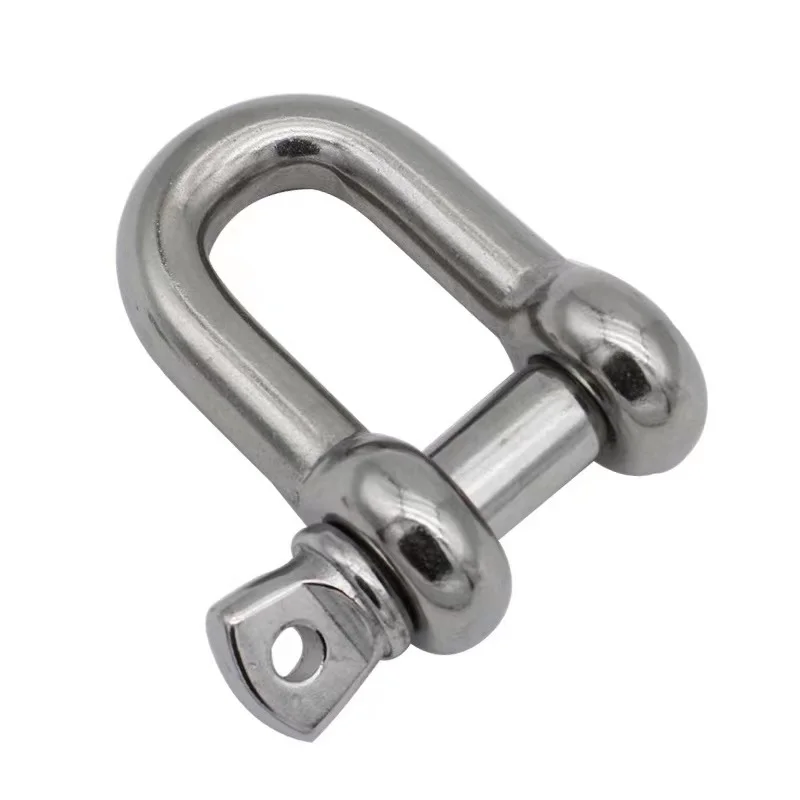
When a D shackle fails on the job, it's rarely a sudden defect—it's almost always a selection mistake. Choosing durable rigging hardware means looking beyond polished surfaces and generic specs. In this post, Wanluo, a stainless steel D shackle manufacturer, shares hard-won insights on evaluating load ratings, material grade, and finishing details so you can avoid costly downtime and safety risks.
Reading the Markings Without Guesswork
Most people squint at a stamp, serial code, or hallmark and jump straight to an assumption. That habit is exactly what turns a simple identification into a mess. Instead, break the marking into visible elements first: letters, numbers, symbols, and any borders or shapes around them. Write down what you actually see, not what you think it should be. A "3" might turn out to be a poorly struck "8," and a "B" could be a worn "R." Doubt is useful here.
Context narrows the possibilities fast. A two-letter code on a piece of jewelry means one thing if the piece is from Birmingham after 1900 and something else entirely if it came from a different assay office or decade. Check the location of the mark, its size, and how it was applied: stamped, engraved, laser-etched. Those details matter more than the letters alone. When you have two or three candidates, look for a second mark nearby—date letters, maker's marks, or inspection stamps rarely travel alone.
Finally, use a known reference, but don't let it override your eyes. A database or book will show you ideal, clean versions of marks. Real-world stamps are often uneven, partially filled, or worn at the edges. Compare proportions, not just shapes. If the match still feels forced, set the object aside and come back later. A fresh look often reveals a detail you skipped while forcing a fit.
Why Stainless Steel Still Needs a Corrosion Plan
Stainless steel earns its reputation from a thin, self-healing chromium oxide layer. But that shield only works when oxygen is available and the surface stays clean. Chlorides are the most common troublemaker; they concentrate in crevices, under gaskets, or at waterlines and strip the oxide film faster than it can reform. Once pitting starts, it often tunnels inward while the outer surface looks nearly intact.
Fabrication adds another layer of risk. Welding heat can pull chromium into carbides along grain boundaries, leaving those zones depleted and prone to intergranular corrosion. Grinding with shared carbon steel tools or walking on the surface with dirty boots can embed tiny iron particles that rust and break the passive film. A proper corrosion plan includes passivation after fabrication, dedicated tooling, and inspections of weld zones.
Plant conditions change over time, too. Higher temperatures, low flow, or exposure to acid vapors can all make stainless steel behave differently than its datasheet suggests. A corrosion plan sets inspection intervals, defines acceptance criteria for staining or shallow pitting, and spells out repair steps before leaks or structural failures appear. Treating stainless steel as maintenance-free is exactly how small corrosion cells become expensive shutdowns.
Matching the Shackle to the Sling, Not the Other Way Around
On most job sites, the day starts with a pile of rigging gear and a lift that needs to go smooth. The mistake plenty of people make is grabbing whatever shackle is closest and then forcing the sling eye to fit around it. That approach works until it doesn't. The sling gets pinched, the pin won't seat properly, or the eye gets chewed up after a few lifts. The better habit is to look at the sling first: check its width, eye size, number of plies, and working load limit, then pick a shackle that actually fits those dimensions.
A shackle that's too narrow for a synthetic sling will bunch the fibers at the sides, turning a straight pull into a point load. A pin that's too large for the eye will stretch the fabric and leave witness marks long before a failure. For wire rope or chain slings, the same logic applies—the shackle body should allow the eye to sit naturally in the bow, not forced sideways. Working load limits should line up as well. If the sling is rated for three tons, a two-ton shackle is the weak link, even if it threads through. The shackle can be slightly stronger than the sling, but never the other way around.
Before the lift, take ten seconds to check how everything sits. The pin should thread without cross-threading and rotate freely once snug. The sling eye should rest in the center of the bow with no twist, no kink, and no overlap on the pin. If the fit isn't clean, change the shackle—not the sling. It's a small decision that saves a lot of gear and keeps the lift predictable.
The Pin Design Most People Overlook
Most people glance at a push pin and see nothing more than a pointed metal spike with a plastic cap. But if you slow down and really look, there's a quiet piece of engineering hiding in plain sight. The way the pin tapers, the slight ridge under the head, the exact angle of the point—these details weren't decided by accident. They were tuned over decades so that the pin goes in smoothly, holds firmly, and comes out without leaving a ragged tear in your corkboard or drywall.
What gets overlooked even more is the relationship between the head and the shaft. A cheap pin has a cap that cracks or pops off after a few uses. A well-designed one spreads the pressure evenly, so the head stays put even when you push at a slight angle. The material choice matters too: hardened steel for the shaft resists bending, while a softer plastic or metal head gives your fingers enough grip without digging in. It's a balance between toughness and comfort that most of us never stop to appreciate.
Next time you pin up a photo, a note, or a calendar page, take an extra second to notice how the pin behaves. Does it glide in without wobbling? Does it stay straight when you remove it? That small moment of attention reveals whether you're holding a forgettable piece of stationery or a tiny tool that someone actually thought about. The best designs often hide in the things we use without thinking—and the pin is a perfect example.
A 30-Second Inspection That Catches Failures Early
Most breakdowns don't happen out of nowhere. They start as small, visible changes: a loose bolt, a hairline crack, a faint leak that leaves a dusty residue. A quick walkaround with your eyes and fingertips can catch these signs before they turn into costly downtime. The trick is to look at the same handful of high-stress points every time, not to scan the whole machine aimlessly.
Set a timer for thirty seconds and focus on three things: fasteners that tend to vibrate loose, surfaces that show fresh wear or discoloration, and any smell or sound that wasn't there yesterday. If you find something off, mark it with tape or take a photo. That small pause creates a paper trail and often reveals a pattern before a single part has the chance to fail.
Managers who adopt this ritual often notice fewer emergency repairs within a few weeks. It works because it forces attention onto a few critical indicators instead of relying on memory or a lengthy checklist. Failures rarely announce themselves loudly; this inspection simply teaches you to hear their whispers.
When a Higher Working Load Limit Is Actually a Risk
It seems counterintuitive, but picking a sling, chain, or lifting component with a working load limit far above what your job requires can create its own set of problems. Oversized gear is heavier, bulkier, and often far less maneuverable than the right-sized option. In a tight workspace or overhead lift, that extra mass translates into slower handling, more strain on the rigger, and a greater chance of accidental impact with nearby structures. The safety margin you thought you were gaining can quickly be offset by the new hazards introduced simply because the equipment is harder to control.
There's also a psychological risk. When the tag on a component reads "10,000 lb WLL" and your load is only 1,500 lb, it's easy for a crew to develop a false sense of invincibility. They may start skipping inspections, improvising hitch configurations, or ignoring environmental factors like sharp edges or corrosive conditions. A higher load rating doesn't make a device immune to misuse, wear, or fatigue. In fact, it can encourage exactly the kind of casual overconfidence that leads to overlooked defects and sudden failures.
Finally, choosing an unnecessarily high working load limit often means you're paying for strength you'll never use, while also sacrificing flexibility and ease of storage. Extra-heavy rigging may require special handling equipment, take up more room on the truck, and accelerate wear on connection points due to its own dead weight. The right WLL is not the biggest number you can find—it's the one that matches your load, your environment, and your team's actual working practices. Sometimes, a lower, more appropriate rating is the genuinely safer choice.
FAQ
The first thing I tell riggers is to check the grain flow and how the bow and pin align under load. A durable shackle doesn't just have thick walls; it has an even radius at the crown, a pin that seats without side play, and no sharp machine marks that can act as stress risers. If the manufacturer can't tell you how they control forging temperatures or what passivation process was used after machining, the shine won't save you.
316 or 316L is the baseline for anything that gets salt spray or industrial washdowns. The molybdenum content is what gives it resistance to pitting, and the low-carbon 'L' variant reduces the risk of weld decay if the shackle body is ever repaired or modified. 304 looks similar and costs less, but in a harbor environment it will develop tea staining and shallow pits far sooner than people expect.
Markings matter only if they correspond to a documented test procedure. I've seen imported shackles with laser-etched WLL numbers that were never proof-loaded to a traceable standard. Ask what standard was used for verification — commonly ASME B30.26 or EN 13889 — and whether the batch test reports are available. If the seller hesitates, treat that WLL as a decoration, not a rating.
For overhead lifting, yes. A forged body aligns the steel's grain structure to follow the curve of the shackle, which gives it predictable failure behavior instead of the brittle fracture you can get with castings that have internal porosity. There are decent cast stainless shackles for light lashing, but the moment the load can hang over people or move unexpectedly, forged is the only sensible choice.
Before every shift, run a gloved finger around the crown and pin holes to feel for hairline cracks that dirt hides. Check the pin for bending by rolling it on a flat surface, and look for any gap between the pin shoulder and the shackle ear when loaded. If the shackle has been dropped or overloaded, set it aside — stainless steel doesn't always show damage as obvious deformation; it can hide micro-cracks that open suddenly.
Stainless is stain-less, not stain-proof. If the shackle was passivated poorly or machined with carbon steel tooling, free iron gets smeared into the surface and that rusts. Seizing usually comes from galling between pin and body threads when both are the same austenitic grade under load. A manufacturer who cares will use a molybdenum disulfide coating, a slight hardness difference between pin and body, or recommend a specific anti-seize compound for frequent disassembly.
A mirror polish can actually serve a purpose on stainless: smoother surfaces hold less salt and are easier to clean, but it should never be a substitute for proper passivation or a clearly marked heat number. Some cheap suppliers polish heavily to hide forging defects or grind marks. I'd rather see a matte, uniform, passivated finish with clean engravings than a bright shine on an unverified body.
Ask for material mill certificates showing the actual 316 chemistry, a proof load certificate that matches the batch, and if the shackle will be used in lifting, a manufacturer's declaration of conformity to ASME B30.26 or an equivalent national standard. Not every application needs full third-party inspection, but if the vendor can't produce any of these on request, that's a signal the supply chain doesn't know its own product.
Conclusion
A leading stainless steel D shackle manufacturer explains that selecting durable rigging hardware begins with deciphering the markings stamped on the bow and pin—treat them as a birth certificate, not decoration. Even high-grade stainless steel deserves a corrosion management plan; crevice corrosion can develop under loads in marine environments, so rinse with fresh water and inspect periodically. A quick rinse with fresh water after exposure to salt spray and a periodic check for pitting at the pin bore go a long way. More importantly, the shackle must match the sling rather than forcing the sling to adapt to an available shackle; using an undersized or incorrectly shaped shackle concentrates stress at the contact point.
Pay close attention to the pin design—screw pins are convenient for temporary connections, while bolt-type pins with nut and cotter offer better security for long-term or vibrating loads. A simple 30-second inspection before each lift can catch early warning signs: hairline cracks, elongated pin holes, bent bows, or corrosion pitting. Even a slightly bent bow or pin that feels loose under finger pressure is grounds for removing the shackle from service immediately. Finally, don't assume a higher working load limit is always safer; an oversized shackle may not seat properly in a smaller sling eye, creating point loading and reducing the assembly's actual capacity.
Contact Us
Contact Person: Shane
Email: [email protected]
Tel/WhatsApp: 8613357785029
Website: https://www.wanluohardware.com