

Tri-isobutyl Phosphate Factory: Inside the Production and Industrial Applications
2026-10-07
Walk through any advanced tri-isobutyl phosphate production line and the first thing that hits you is the balance between chemistry and control. TiBP may not make headlines, but it quietly powers metal extraction, flame retardancy, and specialized solvent systems around the globe. At Fortune, that balance is built into every batch. Here’s an inside look at how TiBP is manufactured—and why its industrial footprint keeps expanding.
From Isobutanol Feedstock to First-Stage Reaction
Isobutanol arrives at the process boundary as a liquid, typically stored in mild steel or stainless tanks under a nitrogen blanket to keep moisture and oxygen out. Before it can enter the reaction train, the feedstock is pumped through a coalescer and a drying bed to bring water content below 0.1 wt%, because even small amounts of water shift equilibrium and accelerate catalyst deactivation later on. The dried alcohol then passes through a preheater and a vaporizer, where it is heated to 180–220 °C and fully vaporized. A small flow of nitrogen or steam is often added to reduce the partial pressure of isobutanol and help sweep the vapors into the reactor, while avoiding hot spots in the vaporizer that could trigger oligomerization of the unsaturated byproducts.
The vapor stream enters a fixed-bed reactor packed with an acidic catalyst, usually gamma-alumina, a silica-alumina blend, or a supported phosphoric acid. Under conditions of 250–350 °C and 0.1–0.3 MPa, the dominant first-stage reaction is intramolecular dehydration of isobutanol to isobutylene and water. Side reactions include the formation of diisobutyl ether, skeletal isomerization to n-butenes, and minor cracking to propylene and methane. Space velocity is typically held between 1 and 4 h⁻¹ to balance conversion and selectivity. Excessively long residence times favor ether formation and carbon deposition, while very short times leave too much unconverted alcohol for the downstream separation loop.
Reactor effluent from this first stage is a mixture of isobutylene, water, unreacted isobutanol, and trace ethers. A rapid quench followed by phase separation removes the bulk of the water, and the organic layer is sent to a distillation column where unconverted isobutanol is recovered and recycled to the vaporizer. In optimized operation, single-pass conversion of isobutanol reaches 85–95%, with isobutylene selectivity above 90%. The real lever for improving performance lies in tailoring the catalyst acid strength and pore size distribution, because too many strong acid sites accelerate coking, while narrow pores restrict access of the branched alcohol molecule. Fine-tuning these properties keeps the first-stage reaction selective and stable over long runs.
Heat Management and Catalyst Choices in the Esterification Train
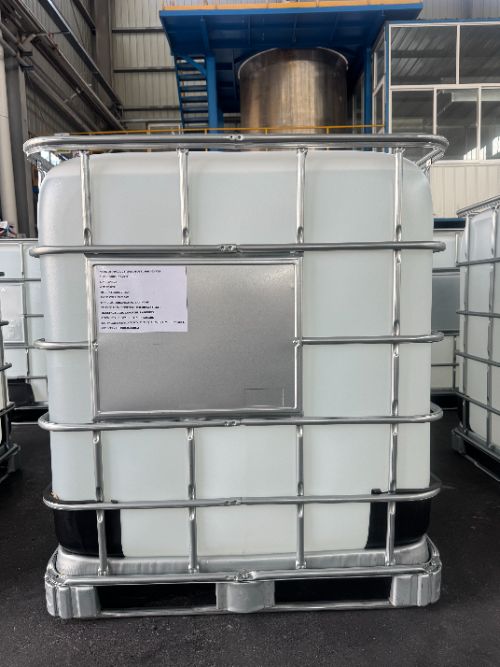
In a continuous esterification train, the reaction between organic acids and alcohols releases enough heat to push temperatures past the point where side reactions—such as ether formation, alcohol dehydration, or oxidative discoloration—become significant. Rather than relying on a single large cooler at the discharge, well-designed trains split heat removal across multiple stages. The first reactor often runs slightly hotter to speed up conversion of the most reactive acid, while interstage heat exchangers strip excess enthalpy before the next catalyst bed. This staged approach prevents thermal runaway and keeps the equilibrium from shifting backward as water is removed.
Catalyst choices directly influence how much heat must be managed. Homogeneous acids like sulfuric acid or methanesulfonic acid act fast and tolerate water, but they require downstream neutralization that adds salt and complicates heat recovery from the quench stream. Solid acid catalysts—sulfonated polystyrene resins, acid-treated clays, or zeolites—avoid liquid neutralization and allow for fixed-bed reactors with simpler thermal control, though many resins degrade above 120°C. Enzyme-based catalysts operate below 60°C and minimize thermal side reactions, but their slow kinetics demand larger reactors and careful temperature control to prevent denaturation.
A common hybrid strategy uses a low-cost homogeneous catalyst in the initial reactor where water concentration is high and corrosion-resistant materials are already in place, then transitions to a solid acid bed after a flash separator removes most of the water. Interstage coolers maintain the solid bed below its degradation threshold, while the exotherm from the remaining conversion is recovered as low-pressure steam for alcohol preheating. This combination typically cuts neutralization waste by half and reduces overall cooling water demand compared to a single-catalyst train with end-of-line heat rejection.
Washing, Neutralizing, and Stripping: The Purification Gauntlet
The path from raw reaction mixture to a clean, usable product rarely runs straight. It twists through a sequence of operations that each demand a different kind of patience. Washing pulls out water-soluble salts and lingering acids or bases, often with a separatory funnel that feels more like a wrestling match than a lab technique. You watch the layers separate, judge the interface, and hope the emulsion breaks before your arm gives out. Then comes neutralizing, a quieter step where the pH drift is coaxed back toward neutral, not with brute force but with slow, deliberate addition and constant swirling. It is easy to overshoot, and the only remedy is to start again from a slightly different angle.
Stripping is where the real stubbornness shows. A solvent that refuses to leave, a trace of impurity that clings to the product despite every wash, a color that lingers like a stain on glassware—these are the moments that test whether you understand the chemistry or are merely following a recipe. Stripping often means reducing pressure, raising temperature, or switching to a solvent with a lower boiling point just long enough to chase the last residues away. It is a game of diminishing returns, but the difference between 95% pure and 99% pure can be the difference between a failed reaction and a publishable result.
The purification gauntlet is not glamorous. It is the unglamorous middle of a synthesis that nobody highlights in a presentation slide. Yet the hands that master washing, neutralizing, and stripping learn to read a mixture by its opacity, its viscosity, and the way a droplet behaves on the side of a flask. They develop an intuition for when to repeat a step and when to accept a small loss to save the bulk of the material. In that sense, purification is less a technical hurdle and more a dialogue with the substance itself—a conversation that only ends when the product finally sits clean, dry, and ready for the next transformation.
Where Tri-isobutyl Phosphate Shows Up Beyond the Expected
Tri-isobutyl phosphate rarely gets mentioned outside its usual roles as a solvent or plasticizer, but a closer look at specialty formulations turns up some odd corners. In certain water-based industrial coatings, it functions less as a primary component and more as a quiet defoamer—reducing foam generated by high-shear mixing without altering surface gloss. The branching of its isobutyl groups gives it a slightly different solubility profile than its straight-chain cousins, which makes it useful where slower migration or lower volatility is needed.
Another overlooked setting is in the production of pigment concentrates for printing inks. Small amounts act as a wetting and dispersing aid, helping organic pigments wet out in resin systems that would otherwise clump or streak. This use rarely appears on product data sheets, but formulators often reach for it when standard phosphate esters fail to balance viscosity and color development.
It also shows up in some textile finishing baths, particularly those involving flame-retardant back-coatings or stiffening agents. Here, tri-isobutyl phosphate helps control foam and improves the evenness of the applied layer. Because the amount is typically less than one percent, it can go unnoticed in supply-chain documentation, yet removing it often leads to visible coating defects.
Tracing Impurity Profiles to Keep Every Batch Within Spec
Impurity tracing starts long before a batch leaves the production line. By mapping each raw material, solvent, and reaction byproduct to its most likely point of entry, teams can anticipate drift instead of reacting to it. This means pulling sample data from upstream suppliers, tracking storage conditions, and recording mid-process holds with enough granularity to spot a shift before it becomes a spec failure.
A practical approach is to build a fingerprint for every batch based on low-level impurity signals rather than waiting for a single high-concentration outlier. When a specific peak grows by a few tenths of a percent across three runs, that pattern often points to a worn column packing, a slowly degrading catalyst, or a mixing dead zone. Linking those small changes to equipment and raw material lots gives operators a clear trigger for intervention.
The goal is not to eliminate all impurities, which is rarely possible, but to keep their ratios predictable enough that every release stays inside the approved range. Tight visual dashboards, trend charts tied to specific unit operations, and simple pass-through rules for suspect lots all help. Over time, the historical impurity map becomes the most reliable guardrail: it shows exactly where a batch is heading, not just where it has been.
Storage Stability and the Overlooked Details of Safe Handling
Many people assume storing something on a shelf is enough, but real stability hinges on factors nobody checks until something goes wrong. Temperature swings near a window or above a heat source can degrade contents faster than the label date suggests. Light exposure, humidity, and even the type of cap seal matter more than most folks realize.
Safe handling is not just about wearing gloves. It's about small habits: keeping containers closed between uses, wiping threads before resealing, and never returning unused material to the original bottle. Cross-contamination from a spoon or scoop that touched another substance can ruin an entire batch months later, and by then the connection is rarely made.
Another detail often skipped is the physical placement of containers. Storing heavy jugs on high shelves or stacking incompatible materials invites spills and reactions. Secondary containment trays cost little but prevent a cracked bottle from becoming a cleanup nightmare. And legible labels, protected from smearing, save more time and prevent more errors than any fancy storage system.
FAQ
The primary starting materials are phosphorus oxychloride and isobutanol. A slight excess of isobutanol is often used to drive the reaction toward completion, and a base such as sodium hydroxide or ammonia is later introduced to neutralize the hydrochloric acid byproduct.
After the initial esterification, the crude product goes through several washing steps with water and dilute alkali to remove unreacted alcohols and acidic impurities. Vacuum distillation is then used to separate tri-isobutyl phosphate from heavier phosphate oligomers, yielding a final product with purity typically above 99%.
The coatings and paint industry uses it as a defoamer to prevent air entrapment during mixing and application. In metal extraction, it serves as a solvent for separating rare earth elements. The textile and paper industries also add it to control foam in processing baths, mainly because it remains effective at low concentrations and is relatively inexpensive.
Workers need chemical-resistant gloves and eye protection since the compound can irritate skin and mucous membranes. Because the esterification releases hydrogen chloride gas, reactors are equipped with scrubbers and proper ventilation. Storage tanks are kept away from strong oxidizers, and spill containment systems are installed to prevent environmental release.
Modern plants route all process vents through activated carbon filters or thermal oxidizers to capture volatile organic compounds. Wastewater from washing steps is treated in on-site biological or chemical treatment units before discharge. Many factories also recover and reuse excess isobutanol from the distillation overhead, reducing overall waste generation.
Each batch is checked for acid number, moisture content, color (APHA scale), and refractive index. Gas chromatography is used to confirm the ester content and detect any residual isobutanol or tributyl phosphate. A foam suppression test is often run in a simulated industrial formulation to verify performance before the product is approved for shipment.
It works by lowering the surface tension of the liquid and spreading rapidly across foam bubble walls, causing them to thin and collapse. In water-based paints and paper coatings, it is added at 0.1 to 0.5 percent by weight to prevent pinholes and craters during drying. Unlike silicone defoamers, it does not interfere with recoatability, which is why many paint manufacturers prefer it.
Continuous flow reactors have replaced many batch processes, cutting reaction times from hours to minutes and improving temperature control. Catalysts based on solid acids or metal oxides are being tested to reduce the need for excess phosphorus oxychloride. Digital process control systems now monitor viscosity and pH in real time, allowing automatic adjustment of the neutralization step and reducing batch-to-batch variability.
Conclusion
Walking through a tri-isobutyl phosphate plant, the process starts quietly with isobutanol being pumped into the first esterification reactor. Operators keep a close eye on the exotherm here, because the reaction between isobutanol and phosphorus oxychloride can spike temperatures fast if the catalyst dose or jacket cooling isn’t adjusted on the fly. Different facilities lean on different catalysts—some prefer acidic resins for easy recovery, others stick with classic mineral acids for higher throughput—but the goal is always the same: push conversion far enough without overcooking the batch into colored by-products. Once the crude ester leaves the reactors, it still carries unreacted alcohol, acid traces, and water. That’s where the purification line earns its keep. A wash column pulls out water-soluble acids, a dilute caustic neutralizes residual acidity, and a stripping tower removes light ends and leftover isobutanol under vacuum. It is unglamorous work, but skipping any of these steps shows up later as haze or off-spec acidity in the final drums.
Tri-isobutyl phosphate is more than a niche plasticizer or defoamer. It shows up in hydraulic fluids where shear stability matters, in lithium battery electrolytes as a flame retardant additive, and in rare earth extraction circuits because its branched alkyl chains resist hydrolysis better than many straight-chain phosphate esters. Every batch leaves the tank farm only after a full impurity profile is checked—looking for mono- and di-ester residues, trace metals from piping, and moisture that can creep in during storage. Those tests are not just paperwork; a batch that passes today can fail tomorrow if drums sit in a hot warehouse or if the nitrogen blanket isn’t maintained. Safe handling gets overlooked until a spill or a slow leak reminds everyone that the same low volatility that makes it useful in high-temperature systems also means it lingers on floors and tools. So the real story of a tri-isobutyl phosphate factory is not a single reactor or a famous end-use—it is the constant balancing act between pushing capacity and keeping every drum stable, clean, and within spec from the first isobutanol feed to the final customer’s receiving dock.
Contact Us
Contact Person: WANG SIHAI
Email: [email protected]
Tel/WhatsApp: +86-13815295628
Website: https://www.fortunechemtech.com/index_en.html